Systemic Strain and the Logic of Escalation
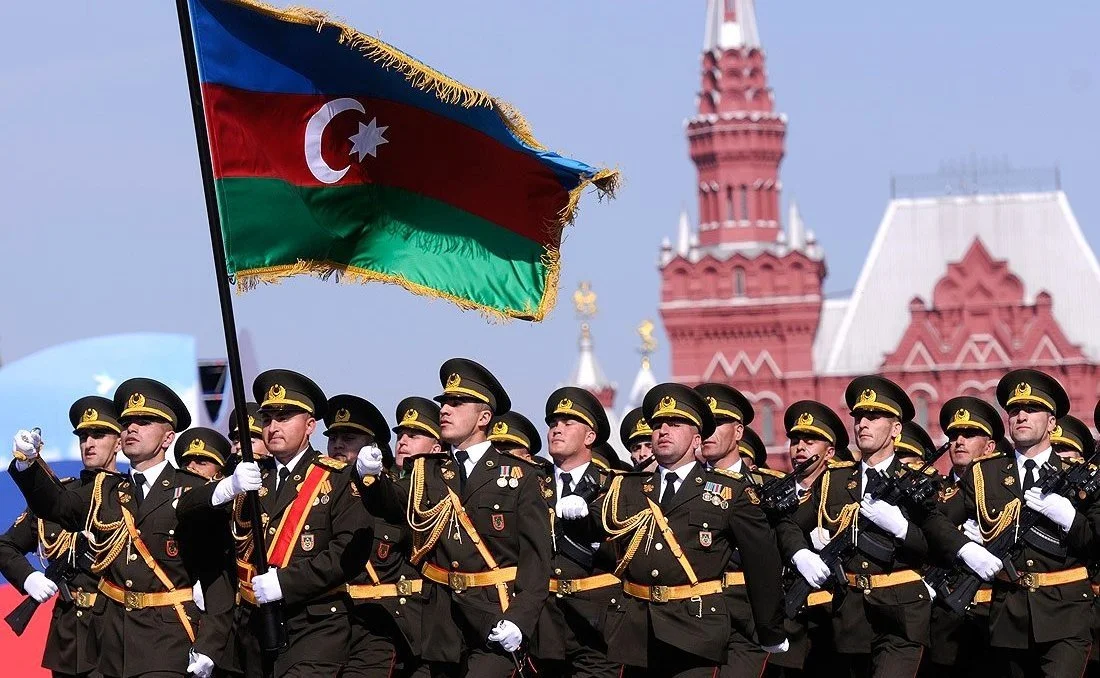
Victory Day Parade, May 9, 2010. Source: kremlin.ru
A figure once known as an anti-Navalny attack dog now presents himself as the head of the Russian opposition. Some pro-war bloggers are openly criticizing Putin for strategic blunders. Émigré commentators speak of a significant deterioration in the Kremlin’s military, economic, and political position. Several outlets have circulated a leaked report this week claiming that Putin is in hiding, fearful of a coup.
Another data point is the upcoming Victory Day parade, which Putin treats as the year’s central symbolic occasion. Ukraine can send drones as far as Moscow, and this year’s parade is expected to be scaled down, with no display of military hardware. Observers abroad and many within Russia’s pro-war camp are beginning to register growing tensions in Putin’s world.
Familiar patterns of wishful thinking among Russian antiwar circles as well as among Ukrainian and Western commentators make moments like this easy to dismiss. The desire to see Putin weakened, humiliated, or removed from power has been so persistent that each new wave of pessimism about the regime risks blending into the last.
Yet this moment is both important and potentially dangerous. The primary risk is likely not to the regime itself. The Kremlin retains sufficient force to defend its position, or so it appears. The real danger lies for Russian society and for Russia’s neighbors. When threatened, Putin, like many Russian leaders before him, tends to go on the offensive.
One of the stranger developments of the past month has been the case of Ilya Remeslo, who has surfaced as an improbable opposition figure. For years, Remeslo was known as a pro-Kremlin blogger and professional informant. His denunciations repeatedly led to convictions against regime critics. His primary target had been Alexei Navalny.
Of all people, Remeslo publicly denied Putin’s political legitimacy in mid-March. He denounced the “special military operation” and described Putin as a “war criminal” and a “thief.” The shift appeared abrupt and failed to convince many observers, who noted that throughout his career Remeslo had never acted in good faith.
Soon after, Remeslo was admitted to a psychiatric hospital. He was released in a month and resumed posting critical commentary about Putin and the system. In an interview with Ksenia Sobchak, a pro-Kremlin media figure, he reiterated his views and went so far as to describe himself as the “head of Russia’s opposition movement.” He said he expected a “palace coup” in Russia this year. In Putin’s Russia, people have been arrested and convicted for much less. Yet Remeslo, who lives in St. Petersburg, has neither been designated a “foreign agent” nor charged with any crime.
A “palace coup” features in a report leaked to the media by a European security agency. The document points to Sergei Shoigu as a possible center of influence that could be gearing up for a move against Putin. It describes tightened security measures, Putin’s extended stays in secure locations, and constant fear of drone attacks targeting the president.
One of Russia’s most widely followed beauty bloggers, until recently an a-political influencer with more than thirteen million followers, has also entered the fray. She attracted significant attention by addressing Putin directly and raising questions about messaging app restrictions and other issues. Such a leap into political advocacy is rare, almost non-existent, in the Russian-language blogosphere. Critical murmurs on Telegram channels, the primary platform for pro-war bloggers, have been intensifying. An increasing number of conservative voices, presenting themselves as true patriots, are sowing doubt, suggesting that Russia is losing ground to Ukraine and struggling to keep up with Ukrainian advances in drone warfare.
Ukrainian drone strikes are reaching ever deeper into Russian territory. They have recently hit targets as far afield as Perm (more than 900 miles from the frontline) and Yekaterinburg (more than 1000 miles). These developments are convincing pro-war commentators that Russia is falling behind technologically. Russia’s Black Sea port of Tuapse has come under repeated drone attack in recent weeks, with the Tuapse oil terminal among the targets. The strikes have disrupted operations and raised concerns about long-term environmental damage.
Whatever one makes of public opinion polls in an authoritarian state, both government-run and independent surveys point to a steady decline in Putin’s approval and trust ratings. Commentators inside and outside Russia have taken note, even if, in absolute terms, Putin, at around seventy percent, remains far more popular than most democratically elected leaders.
A troubled economy shadows all of these developments. Data from Russia’s federal statistics agency, Rosstat, suggest that the economy is not merely slowing but contracting, with GDP and industrial output declining year-on-year in January and February. According to Re: Russia, an independent analytical platform, business climate indicators – for the economy as a whole and across individual sectors – have fallen back to levels last seen in the second quarter of 2022, when Russia was absorbing the initial shock of the war and Western sanctions.
Some of these factors are coincidental and disparate. Others are expected and causally related. The claims involving Remeslo and the speculation about Shoigu as a potential coup ringleader should not be taken at face value. The latter in particular sounds fantastical. Yet taken together, these developments generate real noise. If they do not amount to a full-blown political crisis, they outline a moment of turbulence for Putin’s system. Ekaterina Schulmann, a prominent political analyst, has recently noted that in the past Putin has responded to internal crises with some kind of aggressive foreign-policy move.
“The usual trick is to go attack someone. Let’s keep that option in mind as not impossible,” Schulmann says in an interview. “But you see, the ‘little attacking thing’ (нападалка – Schulmann uses an invented Russian word) has gotten a bit worn down over the years. Yet, as we know now, in 2022, there wasn’t really much to attack with either. That didn’t stop them from making that kind of decision, though.”
Putin may be beholden to an established pattern of escalation. The late Gleb Pavlovsky, one of the architects of the current political system and a Putin strategist until 2011, argued that a logic of escalation was evident in Boris Yeltsin’s tenure. “An experience of escalation was accumulating in the system’s very DNA,” Pavlovsky said. “There has to be… a demonstration of leadership. What we see is a constant search for ways to heighten the drama of breaking out of the previous deadlock by introducing a new narrative, a new storyline.”
Escalatory patterns in Russia are hardly a secret. They are widely debated by Russia’s neighbors. This helps explain the persistent discussion of a possible attack on the Baltic states or Poland or even Norway. Experts routinely point to a stretched budget, a worn-down military, personnel shortages, a limited technological base, and growing war fatigue within Russian society, among the myriad other constraints. Yet the conversation about potential aggression in Europe persists. For many Europeans, the possibility of a future attack is a baseline expectation.
A “demonstration of leadership” is expected from Russia’s rulers. Given the exhaustion of Russia’s military in Ukraine, such a demonstration might more readily be domestic rather than military. The impression of a weakened leader may be becoming increasingly widespread among Russia’s elites, including those in the security services, which may themselves be amplifying these anxieties in the media. This is unverifiable, but security agencies may be behind voices like Remeslo’s. No one understands the script better than security people.
It is unreasonable to expect Putin to back down or to retire, and he has a range of options. They include a purge of the elites, new punitive measures against the opposition, a mass mobilization effort, a government reshuffle, or the elevation of a figure close to the security services to the post of prime minister. Putin, as always, will try to exploit the element of surprise. He is surely looking for ways to act and to force others to react to him or at the very least to fear his next steps. The true sign of failure will be when Putin’s orders are no longer carried out.
Maxim Trudolyubov edits The Russia File, the Kennan Institute’s publication, and writes on Russian politics, society, and institutions.