
Loyal Moscow, Restless Russia
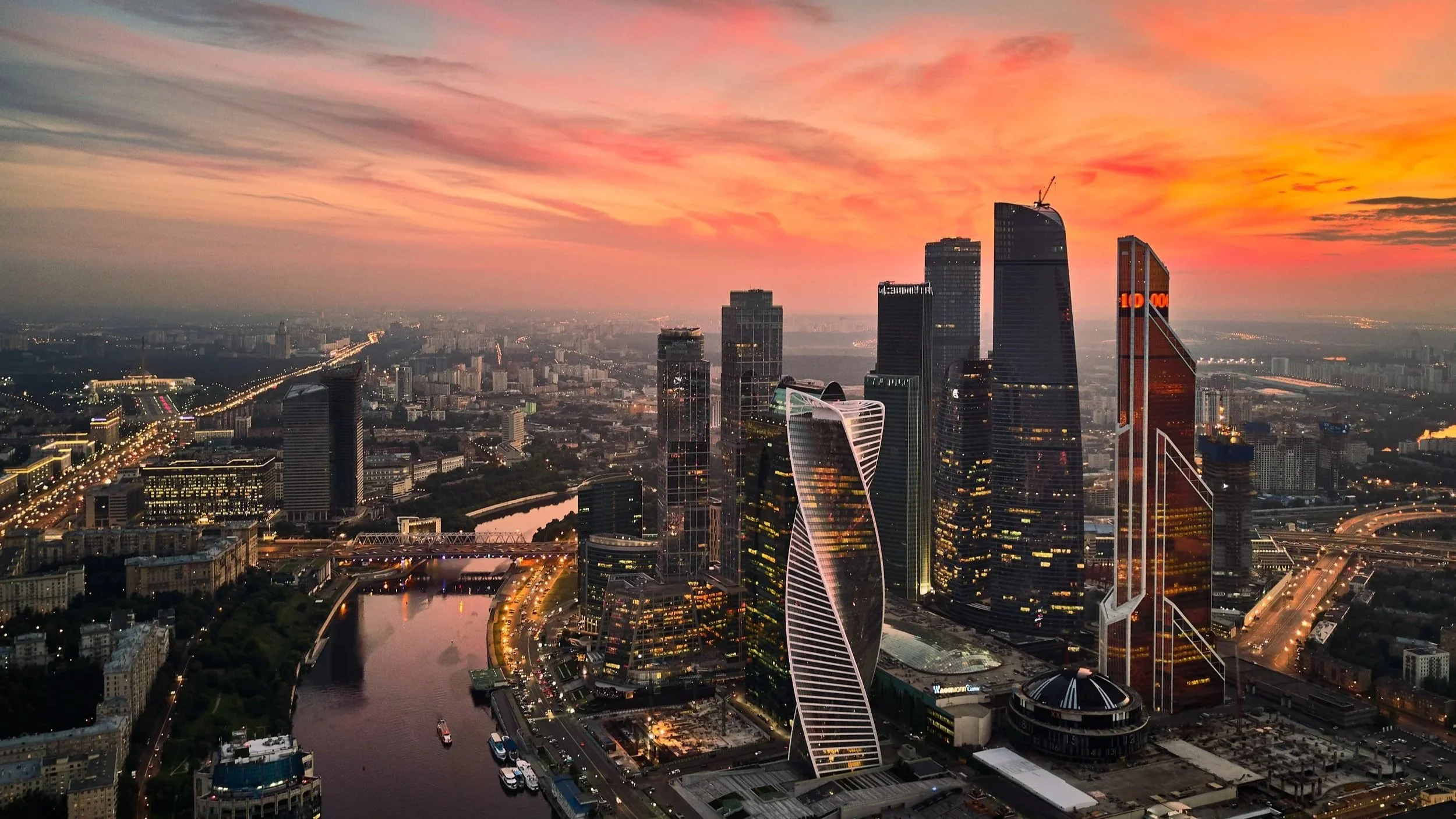
Moscow. Photo by Deensel (July 25, 2017).
Russia’s full-scale war against Ukraine has thrown into sharp relief a cleavage that long predates the invasion. This is the profound and growing divide between Moscow and the rest of the country.Before 2022, Moscow’s privileged position was largely structural. Decades of centralized budget allocation channeled a disproportionate share of the nation’s resources into the capital, producing markedly higher living standards, better educational opportunities, and greater exposure to the outside world through travel, business, and professional ties. This material and cultural comfort placed many Muscovites higher up Maslow’s hierarchy of needs. With their basic physiological and security needs comfortably met, they had the cognitive and emotional bandwidth to focus on higher-order concerns such as self-respect, self-actualization, and political expression. As the Kremlin gradually tightened the screws, Muscovites tended to be more opposition-minded, more open to the West, and more willing to voice discontent.
In the regions, the picture was very different. Although living conditions had improved considerably since the chaotic 1990s, most residents still operated much closer to the base of the needs pyramid. Securing the essentials – stable income, housing, healthcare, and physical security – consumed the bulk of their energy. Political attitudes tended toward caution and daily-life conservatism. Any significant change carried the risk of upsetting a hard-won equilibrium and plunging people back into the instability of the first post-Soviet years.
Russia had become two countries sharing a single name. Other cleavages certainly existed – between large cities and rural areas, prosperous and depressed regions, resource-rich territories and those left behind. Yet the most consequential divide ran along the Moscow-versus-regions axis. It was a direct product of Russia’s rent-extraction model, in which resources were systematically drawn from the periphery to the center. One Russia was affluent, cosmopolitan, and politically alive. The other was more precarious, inward-looking, and instinctively protective of the fragile stability it had managed to achieve.
This prewar equilibrium was not merely socioeconomic. It was deeply political. The very mechanism that stabilized the system — concentrating wealth, opportunity, and talent in Moscow, while keeping the regions dependent and preoccupied with the basics — also shaped its underlying fault lines. Though the war has inverted this pattern, the structural imbalance itself remains unresolved.Today, dissatisfaction with the war, frustration with the authorities and a desire for peace are concentrated primarily in the regions, and Moscow has become an outlier. The capital now stands apart for its more statist and militaristic attitudes.
*
Data from the Levada Center’s May 2026 survey illustrate the scale of the shift. Support for the actions of the Russian armed forces in Ukraine reached 83 percent among Muscovites, nine percentage points above the national average. Moscow’s level of support exceeds that of other large cities (population over 500,000) by 11 points, mid-sized cities (100,000–500,000) by twelve points, smaller cities by five points, and rural areas by eleven points.
The contrast becomes even starker on the question of war versus peace. In Moscow, 53 percent believe Russia should continue military operations, while only 36 percent favor negotiations. Across the rest of the country, the “peace party” predominates. In rural areas, 65 percent support negotiations compared with just 24 percent who favor continuing the war; in cities with populations under 100,000, the ratio is 61 to 27 percent; and even in other large cities, it stands at 63 to 28 percent. Moscow’s bellicose stance (36 to 53 percent) sets it apart.
This militaristic mood in the capital has proved remarkably resilient. Even after Ukrainian drone strikes began reaching Moscow, a Levada Center poll conducted in late June, following what was then the largest attack on Moscow and the surrounding region, on June 18, found that 78 percent of Muscovites still supported the actions of the Russian armed forces in Ukraine, compared with 67 percent nationwide.Over the course of the month, support for the war among Muscovites declined by only five percentage points, while the national average fell by seven points. As a result, the gap between the capital and the country as a whole not only failed to narrow but actually widened, from nine percentage points in May to 11 by late June.This hawkish orientation extends to attitudes toward countries labeled “unfriendly” by state propaganda. In May 2026, 70 percent of Muscovites reported a negative or very negative view of the United States – 14 points above the national average. Similarly, 83 percent of Muscovites held negative views of EU countries, compared with 67 percent in other large cities, 63 percent in mid-sized cities, and 59 percent in small towns and villages. Moscow also leads in hostility toward NATO and the United Nations. In other words, Moscow today clearly leads the rest of Russia in the level of confrontational rhetoric.
Muscovites are also significantly more likely to believe the country is moving in the right direction (74 percent, versus 59 percent in other large cities and 56–61 elsewhere). They report lower levels of anxiety, irritation, and fear, and are far more inclined to describe the current political situation as “calm” or “favorable” (51 percent, compared with 30–36 percent in other settlement types). Unsurprisingly, willingness to participate in political protests is markedly lower in the capital: only six percent of Muscovites say they would join such actions, versus fifteen percent in rural areas and ten percent in small towns.Taken together, these figures reveal a striking inversion. The segment of Russian society that was once the engine of political discontent has become the most loyal and belligerent. The regions, historically more passive, now harbor the greater reservoir of war fatigue and desire for change. This reversal did not occur by chance. Several mutually reinforcing factors have reshaped Russian public opinion.
First, the direct costs of the war and Western sanctions have fallen far more heavily on the regions. Budgetary pressures provide a telling indicator. By the first quarter of 2026, two-thirds of Russia’s federal subjects – 56 regions in total – were running deficits, up from 46 a year earlier and just six in early 2022, when the full-scale invasion began. Moscow, by contrast, recorded a budget surplus of 276.9 billion rubles during the same period.Although Muscovites have not been fully insulated from the economic consequences of the war, their much stronger starting position has cushioned the blow. A modest decline in living standards does not yet threaten their ability to satisfy basic needs. In the regions, by contrast, the war has eroded precisely that foundational sense of security. Viewed through the lens of Maslow’s hierarchy, many regional residents have been pushed lower down the pyramid, with basic material well-being and personal security once again becoming pressing concerns.Predictably, this deterioration has sparked growing discontent. Under conditions of scarcity, the relationship between living standards and protest potential is often inverse: the higher the baseline level of well-being, the less willing people are to risk it. Only nine percent of Muscovites say they would participate in protests over declining living standards or in defense of their rights, compared with 20 percent in rural areas and 22 percent in small towns.
Second, the war’s impact extends beyond economic concerns and increasingly includes concerns about safety. Ukrainian strikes have affected the regions of European Russia far more frequently than Moscow. At the same time, the burden of mobilization has fallen disproportionately on the provinces. Limited economic opportunities and weaker career prospects have pushed larger numbers of men in the regions to sign military contracts, making the war a far more immediate and personal reality there.In many regions, nearly everyone knows someone or knows someone who knows someone who has been mobilized, enlisted, or now works in military production. In Moscow, the war remains largely abstract, rarely intruding into daily life in a visible or sustained way.This proximity has profoundly shaped perceptions of risk. Residents of the regions are significantly more likely to fear that the war in Ukraine could escalate into a direct military confrontation between Russia and NATO. According to Levada Center data, only 46 percent of Muscovites express concern about such a scenario, compared with 53–58 percent in other types of settlements. A January survey by FOM, a state-run pollster, produced similar results. Just 23 percent of Muscovites feared a military attack by foreign countries, compared with 36–40 percent in cities of various sizes and 37 percent in rural areas. Muscovites also report lower levels of concern about the possibility of civil conflict than the national average.
Third, the new asymmetry between Moscow and the regions has been reinforced by the specific character of Russia’s wartime emigration wave. Since the start of the full-scale invasion, at least 650,000 people have left the country. Surveys of this exodus consistently show that its core consisted of Muscovites. This is hardly surprising. Spontaneous, unprepared emigration was feasible only for those with certain advantages: savings, overseas connections that could facilitate visas, or employment in international or large Russian companies. The offices of such companies were located predominantly in Moscow.
Among those who departed were many politically active citizens who had formed a significant part of the capital’s pre-war protest electorate. Their departure has lowered the temperature of political dissent in Moscow. This does not mean that everyone who remained is a staunch supporter of the regime. Rather, the exodus reduced the critical mass and concentration of opposition-minded individuals. Combined with the other factors described above, it has helped invert the pre-war pattern of political discontent.
*
The result is a paradox. For decades, the Russian system maintained regional loyalty precisely by keeping the provinces relatively poor and channeling career advancement and resources through the federal center. The war has now produced the opposite effect: the heavier the conflict bears down on the regions, the stronger the discontent and the louder the demand for change. Cushioned by relative prosperity and saturated propaganda, Moscow has become a political enclave of militarism and loyalty.This inversion, from an “opposition-minded capital and loyal regions” to “war-weary regions and a hawkish capital,” may prove to be one of the most important and underappreciated social consequences of the war. And it is far from exhausted.
Unless the war ends with a genuine decentralization of power and resources, accompanied by meaningful federalization, this cleavage is likely to widen further. The existing imbalances in budget allocation, investment, infrastructure, and opportunity will continue to reproduce themselves. Moscow will evolve into a truncated global metropolis with the mentality of a besieged fortress, while much of the country drifts toward survival and a form of internal colonialism.Russia will increasingly cease to function as a single social and political space, becoming two distinct entities that happen to share the same formal institutions. One will be relatively prosperous, militarized, and loyal. The other will be exhausted, resentful, and progressively less responsive to traditional mechanisms of control. The longer the current model of hyper-centralization endures, the less likely it becomes that these diverging trajectories will ever converge again.
The war has already exposed the fragility of a vertical power structure built on artificial equalization through poverty and dependence. Unless that structure is fundamentally rethought, the Moscow-regions divide will rank among the most serious internal challenges facing post-war Russia. It will have to be addressed amid accumulated mutual alienation and fundamentally different conceptions of what constitutes a “normal life.”
Olga Irisova is a prominent Russian political analyst and the cofounder and editor-in-chief of Riddle Russia, an online journal of Russian affairs.