
Letter from Kyiv
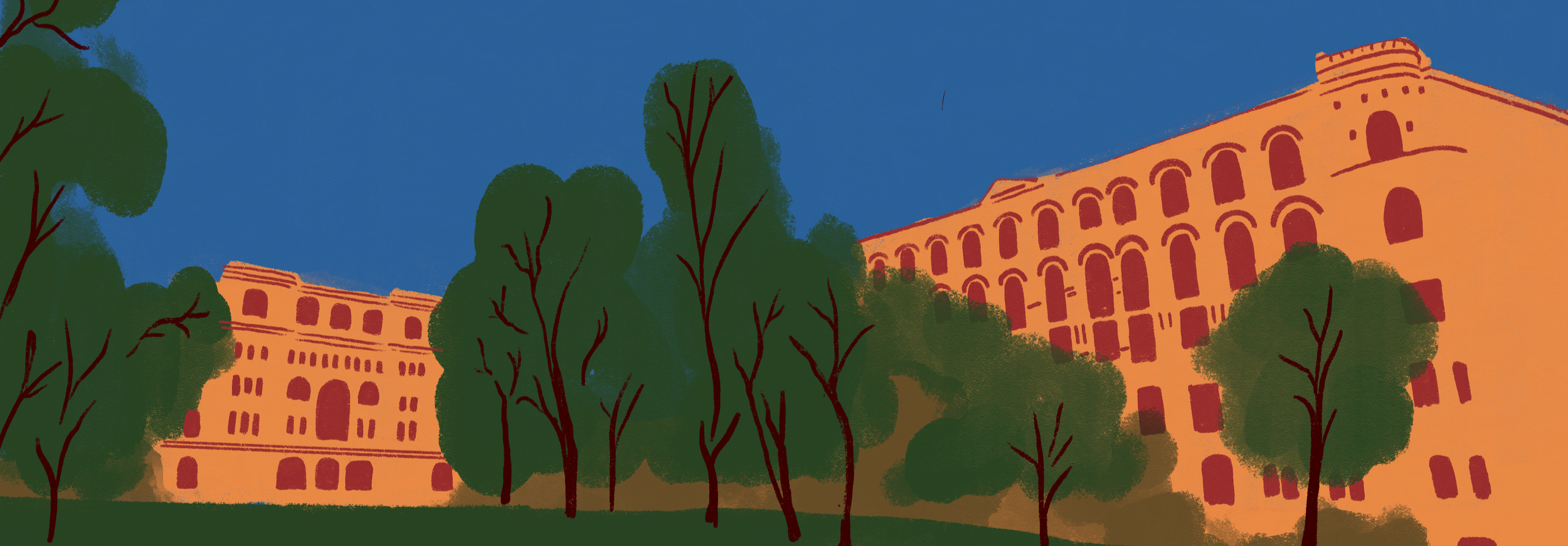
Ivan Franko Square, site of the 2026 protests against the dismissal of Mykhailo Fedorov as Minister of Defence of Ukraine.
Late autumn used to be the season for revolutions in Kyiv. Since last year, this has changed, and in July 2025 there was the first mass protest since martial law was instituted in 2022. It was dubbed “the cardboard Maidan,” though it was not on the Maidan, not on Kyiv’s Independence Square exactly, but on a square not far away. The protest was held near to the Office of the President; in theory he was supposed to see it. Despite restrictions on mass gatherings under martial law, the protest was not shut down. To the contrary: its demands were approved by the Rada, the Ukrainian Parliament.
This July, people once again went on the streets in Kyiv and in some other cities. The reason for the “cardboard Maidan” was President Zelensky’s abrupt decision to reshuffle the Cabinet of Ministers. First and foremost, the Defense Minister Mykhailo Fedorov was affected. He is Zelensky’s old ally, the man behind his digital election campaign in 2019, the master of social networks and later the Minister of Digitalization (until January 2026). His conflict with the Commander-in-Chief of the Armed Forces of Ukraine, General Oleksandr Syrskyi, is common knowledge.
The sudden decision to fire Fedorov was interpreted as a preference for Syrski over Fedorov, and of this Ukrainians did not approve. The latest polls show that fifty-seven percent decisively disapprove and only six percent approve the move. To a substantial degree, the protests were against Syrskyi. For more than a year, his “assault regiments” – also known as “Syrskyi’s regiments” because of his unofficially direct control over them – have been an open secret.
The officers of the regiments were accused of horrific human-rights abuses, the kidnapping, torture and killing of conscripted Ukrainians. Dozens of these alleged abuses occurred in training camps before soldiers make it to the battlefield. Only in June was the media silence lifted. The journalist Kateryna Lykhohliad of Babel.ua broke the story, and the practices of these battalions became a matter of public debate.
One must step back at this point and consider an explanation for recent developments in Ukraine. Ukrainians, who felt a security deficit even before the full-scale invasion, have a low level of tolerance for violence and especially for violence on which the state has a monopoly. This is a meaningful difference between Ukraine and Russia. In the past thirty-five years, the political history of Ukraine had been driven by the rejection of a “Russian” approach, which is the idea that the state has legitimate and unaccountable power to inflict violence on its people.
A short overview of Ukrainian protests illuminates popular thinking about the state-society relationship. The first was a student-led hunger strike in 1990, the “revolution on granite,” as it was called, which took place on Maidan Nezalezhnosti (Independence Square) back in the U.S.S.R. At the beginning, the students demanded that all Ukrainians conscripted into the Soviet Army serve within the Ukrainian Republic’s borders; that a New Union Treaty not be signed (that the Soviet Union not be rebooted, to put it simply); and that Prime Minister Vitaliy Masol resign. Soon he did resign, military conscription was limited to the territory of Ukraine and the planned New Union Treaty was off the table.
It would be wrong to compare these protests with the simultaneous upheaval in Central Europe, which were a radical break from Soviet control. Independent Ukraine became a reality in 1991, a function of consensus among the old Communist elites and their opponents, the national democrats. At the core of this consensus was a perceived security deficit, a state of affairs destined to endure for as long as Moscow retained its monopoly for violence.
Such protest was non-violent in 1990. So too was the Orange Revolution of 2004, which also took place on the Maidan. The Orange Revolution was stereotyped as the Ukrainian Woodstock, the belated analogue of Central Europe’s “velvet revolutions” in 1989, to which Central Europe’s Ukrainian neighbors could easily relate. Manipulated results of a presidential election and the country’s general course inspired the Orange Revolution, when supporters of the pro-Western Victor Yushchenko took to the streets to defend his victory against the pro-Russian Victor Yanukovych. Once again, the choice was not simply geopolitical, as it might have looked from outside. At issue was the containment of violence at home.
Yanukovych was a convicted criminal who had spent time in prison for robbery. He practiced mafia-style leadership, which he had honed as Governor of the Donetsk region. Leonid Kuchma, who was then the President, was Ukrainian enough in his thinking not to attack the protesters, despite the Kremlin’s advice that he do exactly this. Yanukovych did eventually become President in 2010 – after Yushchenko’s failure to learn the lesson of non-violence. In 2014, Yanukovych’s presidency ended in bloody clashes on the Maidan. (Now the Maidan is something of a memorial space, which is why protesters gather elsewhere.) Yanukovych fled to Russia in disgrace.
The most recent “Maidan” of 2014 is a curious tale of cruelty and violence, both of which have the potential to ignite Ukrainian society. Had Yanukovych chosen not to attack the protesters, the relatively small-scale camp on the Maidan might have dispersed by its own volition. The initial protests focused on Yanukovych’s pivot toward Russia and away from the EU. A second wave of protests brought millions on the streets and up to million in Kyiv alone. People came to defend students who had been severely beaten by riot police. Every time violence was employed, it fueled intense resistance. (In 2011-2012, Russians did protest Putin’s “return” to power, but their protests were put down with violence and the threat of violence).
Insiders may see other reasons for Zelensky’s dismissal of Fedorov after only six months in office. Outside the halls of power, a familiar crossroads is visible. On one side is a society in which people feel helpless and worried about their rights, and on the other is a country with humane policies. Fedorov had articulated decency as a state priority. For those on the frontline, the protest’s core slogan – fight with drones, not with people – may sound naïve and unrealistic. Yet it traces a red line for Ukrainian society, which is accepting of the fact that people die daily at the front and during air raids, without accepting that these deaths are for nothing, the product of foreign malice and domestic impunity.
The latest polls have revealed something that might appear novel for Ukraine. Those respondents who approved replacing Syrskyi were critical of his ethnic background. General Syrskyi does indeed have distant family in Russia, and in private he speaks Russian, something that often happens in Ukraine. These circumstances were never a decisive factor for a public figure; they were rarely worth mentioning. Syrskyi was labeled “Russian” because people associated his practices with what they had heard about the Russian army.
As of now, the “cardboard Maidan” has partly won. Similarly, protesters last July had forced the parliament not to strip anti-corruption institutions of their independence. Parliament had been on the cusp of violating promises to fight corruption, promises that had been made to Ukrainian society and to Ukraine’s Western partners. If in 2025 EU countries and their institutions could pressure Ukrainian authorities and Zelensky in particular, by July of 2026 Ukrainians were mostly on their own.
Their actions worked. Syrskyi was dismissed, and his opponent, General Mykhailo Drapatyi, who has been under his duress lately, was appointed Commander-in-Chief. (This was probably for the best). Fedorov’s fate is still undecided. He has categorically refused to take a job other than his old one as Minister of Defense. For the sake of getting past this crisis, Fedorov will not confront Zelensky, his former employer and patron.
“The source of power is the people with cardboard signs.” That was a popular slogan in 2025, and an idea pundits and opinion leaders like to discuss today. The idea is not new, though the wording has been updated. In the vocabulary of Ukrainian politics, “Maidan” and “people with cardboard” are synonymous. It’s how Ukrainians fix things.
*
Not all mess-ups can be fixed by popular protest. The Cabinet reshuffle and the ensuing push-back had deflected attention from a diplomatic scandal caused by another of Zelensky’s snap decisions. The President had named an elite classified military unit of the Special Operations Forces “Pivnich” (“North”) after UPA, the Ukrainian Insurgent Army. Zelensky’s two moves had this in common: the reasoning and motivation behind them is opaque.
The memory and perception of UPA is its own troubled story within Ukraine. The UPA has a bad name in Poland, where it is held accountable for the 1943 ethnic cleansing of Poles in Volyn, one of two regions in interwar Republic of Poland that had become part of Poland after World War I. For most Poles, news about the elite unit named after UPA was a slap in the face. Most Ukrainians, who associate UPA with anti-Soviet activities and for whom much of this is ancient history, did not understand what they had done wrong.
The whole story has turned ugly. Karol Nawrocki, Poland’s President, had made a career as the hawkish head of the Institute of National Memory, putting forward a stridently patriotic version of Polish history. He stripped Zelensky of the Order of White Eagle, which had been awarded to him in 2023. Zelensky sent him the Order back by mail.
This flare-up has sparked anti-Polish rage in Ukraine and fueled anti-Ukrainian sentiments in Poland. It was followed by ethnically motivated attacks in Poland, where since 2022 roughly 1.5 million Ukrainians have taken up residence, most of them as refugees. Few people asked the obvious question: who in Kyiv had initiated the naming of the Special Operations Forces unit? Officially, this unit was said to have asked for the name itself. As mentioned above, the unit is classified; its members cannot reveal themselves, making fact checking all but impossible. All we have is Zelensky’s word and his assumption of all responsibility.
If standard procedure was followed before the decree ended up on Zelensky’s desk, the naming would have been initiated by the unit’s commander and by senior officers. It would then have been approved by the Ministry of Defense. Regrettably, the Ministry of Foreign Relations is not typically involved in such defense-oriented decisions. Common sense and the sensitive context of Ukrainian–Polish relations would have made it a good idea to consult with the MFA; but as far as I know the Office of President failed to do this. Instead, the MFA was left cleaning up the mess.
We can only guess who brought the idea to Zelensky. It’s hard to believe he was unaware of the consequences. Zelensky’s Polish counterparts and interlocutors, including former Polish president Andrzej Duda, the one who gave him Poland’s highest state honor in 2023, must have been discussing the matter with him. They must have warned Zelensky that an uncritical heroization of UPA would elicit outrage in Poland.
With his show business background, Zelensky likely knew little about ethnic cleansing at Volyn before he became president and had to deal with this problem inherited from the mid-twentieth century. Ukrainians officially use the evasive term “Volyn tragedy,” whereas “Volyn massacre,” the more common term in Poland, is rooted in that country’s collective memory. Most people in Ukraine learnt about this episode of history only from conflict with Poland. Zelensky is from Kryvyj Rih, a part of Ukraine that had been under Soviet rule since 1920s. People like Zelensky have a hard time relating to this fraught history, let alone admitting that it was a “Ukrainian crime,” as Polish society expects Ukrainians to do.
Mainstream internal Ukrainian discussions these days tend to end in whataboutism. The Poles get blamed for discriminating against Ukrainians and for the Polish Government’s anti-Ukrainian policies before the WWII. Ukrainian officials and opinion leaders also stress the symmetry of the 1943 crimes, when Polish Armia Krajowa killed Ukrainians in revenge, emphasizing the idea that both countries should take responsibility for wartime bloodshed. To be blunt, Ukrainian society has long been reluctant to admit the guilt of UPA militants for killing civilians, most of them poor peasants from ethnically Polish villages. A serious discussion on the matter seems impossible in the short term. Too many ambitious Ukrainians instrumentalize the issue to fuel emotions and to gain symbolic capital for themselves.
Poland’s harsh reaction created a counter-reaction in Ukraine, very much like what happened when President Donald Trump and Vice President Vance bullied Zelensky in the Oval Office in 2025. That incident bolstered Zelensky’s popularity at home and even brought him some new supporters. Nawrocki’s rhetoric and the decision to strip the President of Ukraine of the Order of White Eagle had the same effect. “Ukrainians united around the flag, the red-and-black one,” wrote Ukrainian opposition MP Volodymyr Viatrovych, who was the director of the Ukrainian Institute of National Remembrance under President Poroshenko, meaning the red-and-black flag of UPA and Ukrainian nationalists. As it happens, nationalisms feed on each other: radicals in Poland respond to their Ukrainian counterparts and vice versa. The peacemakers are hated by both.
Ukrainian nationalists had organized the Insurgent Army during World War II. First under Nazi and then under Soviet occupation, it acted mostly in Western Ukraine. In their resistance to the Polish State, Ukrainian nationalists were pursuing a “the worse the better” approach. Their main targets were not Polish chauvinists but the Ukrainian and Polish liberals, rare birds for that era, who opposed discrimination against Ukrainians and wanted to bring together Poles and Ukrainians in Galicia and Volyn, the two regions of Poland with the largest Ukrainian populations. Soviet partisans, Polish partisans, Polish Armia Krajowa (Home Army) and the UPA all fought against Nazi occupation. Different groups had different approaches: UPA did not have a conventional state behind it; Armia Krajowa had Poland’s government-in-exile in London; and Soviet partisans had the Soviet state.
When the Red Army gained the control over the region in 1944, UPA fought against Soviet rule in Western Ukraine. This period of UPA history has been demonized by Soviet and later by Russian propaganda, and it has been praised by Ukrainian state. What most of Ukrainians knew about the Insurgent Army, long an archvillain for Soviet propaganda, is its persistence and determination in fighting the Soviet Union after the Yalta Conference and into the Cold War. The last partisans were killed at the early 1960s.
Soviet ideologists picked one of the UPA’s leaders, Stepan Bandera, as their poster boy for Ukrainian collaboration with the Nazis, the worst possible enemy of Soviet order. (Ironically in context, Bandera spent most of WWII in a German concentration camp). A derivative of his name became the term for Ukrainian nationalists, a broad and nebulous category in the eyes of Soviet and later Russian imperialists: banderivtsi. In Putin’s Russia, it is used for everybody who questions a pro-Russian course for Ukraine.
Mocking Russia’s propaganda machine during the Maidan Revolution of 2013-2014, Ukrainian protesters started to call themselves banderivtsi, meaning “the enemies of the Russian regime and its Ukrainian followers and allies.” Such satiric self-naming became extremely popular. Most of those who called themselves banderivtsi knew next to nothing about the real person named Stepan Bandera, and they had little interest in the history of UPA. Many were Russian speakers. Banderivtsi meant the protesters on the Maidan, young people from Kyiv, who had been brought up on Hollywood movies and Harry Potter, and not nationalists of 1930s ideological provenance.
Bandera was later appropriated in Ukrainian popular culture, and these days you can find dozens of t-shirts and posters with him, sometimes ironic and even ironically sexualized. When I explain the phenomenon abroad, I find the closest analogy to be Che Guevara, a symbol of resistance, an easily recognizable image with almost no link to the historical figure from Latin America. Neither the actual Che Guevara nor the actual Bandera would garner the approval of the most of their contemporary “followers.” They are avatars for ideas that float free from historical context.
Bear this in mind for what happened next in Ukraine. The appropriation of Bandera’s name by Maidan protesters signaled the symbolic bankruptcy of his devoted followers, who are Ukrainian nationalists. To restore the link between the popular image and the man’s ideology, it seems, they successfully pushed the law “On the Legal Status and Commemoration of Fighters for Independence of Ukraine in the XX Century” in 2015. It restricted an open-ended discussion about UPA, prohibiting criticism of the Ukrainian Nationalist Organization (OUN) and the Ukrainian Insurgent Army (UPA). The Verkhovna Rada (Ukrainian parliament) voted for the bill at the worst possible moment. On that same day, April 9, Bronislaw Komorowski, then the President of Poland, delivered a speech on solidarity with Ukraine and on the deep rapprochement between the two countries.
Komorowski had chosen Kyiv for his last foreign visit before the presidential election. Soon after his speech, the Rada voted for the so-called “decommunization laws,” including the law supposed to resolve all questions about UPA’s bright and dark sides. Poles saw the move as a public humiliation of their president. Polish liberals would soon lose power, and right-wing conservatives (PiS) would retaliate with laws of their own. Ukrainians would rename one of Kyiv’s major thoroughfares after Bandera, and from there on it only got worse.
In July 2025 and again in July 2026, Zelensky demonstrated that he could hear the agora or, as Ukrainians would say, the voice of the Maidan. Having built a career on a profound and intuitive understanding of the Ukrainian public, he deserves credit for continuing to listen, but in a bi-lateral crisis the agora cannot substitute for policy making and for diplomatic finesse. Too many Ukrainian public intellectuals chose to ride the wave of popular anger, and not to stand against it.
This summer season of turmoil in Kyiv has demonstrated two things at once. Democratic give-and-take between the state and its citizens is alive and well in Ukraine, and Ukraine’s educated classes failed to tame the dragon of right-wing sentiment — at home and abroad. Poland has influential voices criticizing Nawrocki, far-right parties and radicalized Poles for their anti-Ukrainian resentment. Many powerful voices in Ukraine are also criticizing Poles and their anti-Ukrainian resentment, an easy job. Turning their gaze inward and addressing anti-Polish resentment would be less comfortable. It is very much needed.
Oksana Forostyna is Opinion Editor at Ukraina Moderna and an author. A former executive editor for Krytyka Journal, she contributes to Liberties, The European Review of Books, Krytyka, and Babel.
Illustration by Kennan Institute Creative Director Jude Schroder.