

Origins of the War: A Conversation with Sylvie Kauffmann
A conversation with Sylvie Kauffmann, a distinguished French journalist, looking at European politics in the lead-up to Russia's 2022 invasion of Ukraine, at the relationship of various European countries to Russia before 2022 and at the European origins of Russia's invasion.

Russian Public Opinion After the Duma Elections
This conversation with Timothy Frye, a political scientist at Columbia University and a member of the Kennan Institute Advisory Council, and Samuel Greene, a political scientist at King's College London, addresses the question of public opinion in Russia - in the wake of the September Duma elections in Russia. It will assess not just the question of what Russian public is, but of how Russian public opinion can be assessed and researched.

Putin’s Campaign to Defeat the West
A conversation with Hanna Notte, a Kennan Institute non-resident fellow, focusing on her book, We Shall Outlast Them: Putin's Global Campaign to Defeat the West, a study of Rusian foriegn policy as it extends beyond Europe and the United States and of the global dynamic behind Russia's war against Ukraine.

Origins of the War: A Conversation with Thomas Wright
A conversation with Thomas Wright, of the Brookings Institution, on the origins of the war, following two lines of inquiry, one on the European context for the war and the other on U.S.-Russian relations as a point of origin for the war.

Origins of the War: A Conversation with Dr. Kateryna Shynkaruk
This convesation with Dr. Kateryna Shynkaruk, a senior lecturer at The Bush School of Government and Public Policy at Texas A&M University, explores the origins of the war, the articulation of Ukrainian foreign policy before the war and the underyling dynamic of the Ukrianian-Russian relationship.

How War Reshaped Russia’s Elite
This conversation, with Alexandra Prokopenko of the Carnegie Endowment, focuses on Prokopenko's recent book, From Sovereigns to Servants: How the War against Ukraine Reshaped Russia's Elite, a study of decision-making at the very top of the Russain government and the patterns of loyalty that enable this decision-making and allow it to be implemented, a history of Russian governance from the 1990s to the present moment.

Origins of the War: A Conversation with Swasti Rao
This conversation with Swasti Rao, a professor at the Jindal School of International Affairs, looks at the origins of the war in Ukraine from multiple points of view, starting with its European and transatlatnic background and emphasizing the global context for this war, both in its origins and in its consequences.

Mapping Eurasia: Russia’s Geopolitics
This conversation will feature Ayse Zarakol of Cambridge University and Alexander Cooley of Barnard College. It will examine the various concepts that have been used to situate Russia geographically, politically and culturally, with an emphasis on the notion of "Eurasia." It will also relate these concepts to the various geopolitical configurations in and around Russia historically.

Origins of the War: A Question of Chronology
On September 9, Kennan Institute Director Michael Kimmage will join the Center for Russian, East European and Eurasian Studies at the University of Michigan for The Origins of the War in Ukraine: A Question of Chronology.
Kimmage will consider three possible points of origin for the war and examine how the chronology we choose shapes our explanations of it. The lecture will also explore the difficulty of conducting chronological analysis without solid empirical evidence, a challenge extending from academic research on Russia to intelligence analysis and policymaking.
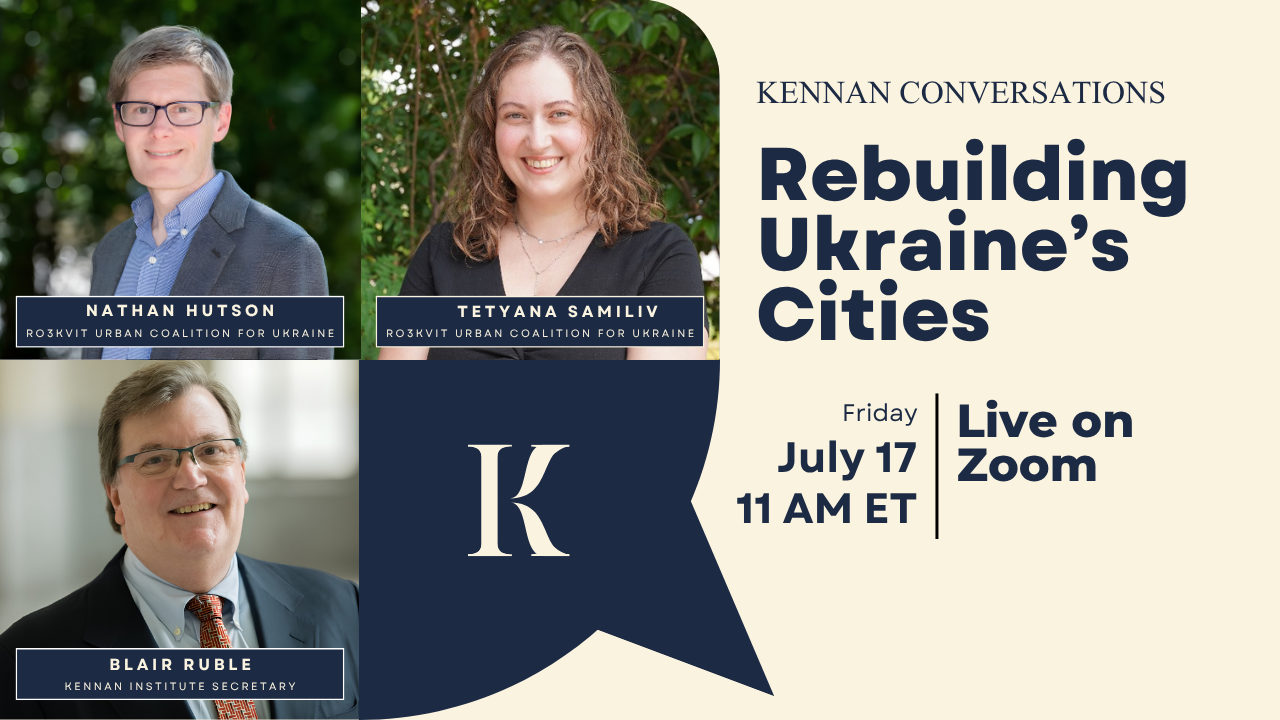
Rebuilding Ukraine’s Cities: The Missing Middle
A conversation with Nathan Hutson and Tetyana Samiliv on rebuilding Ukraine.
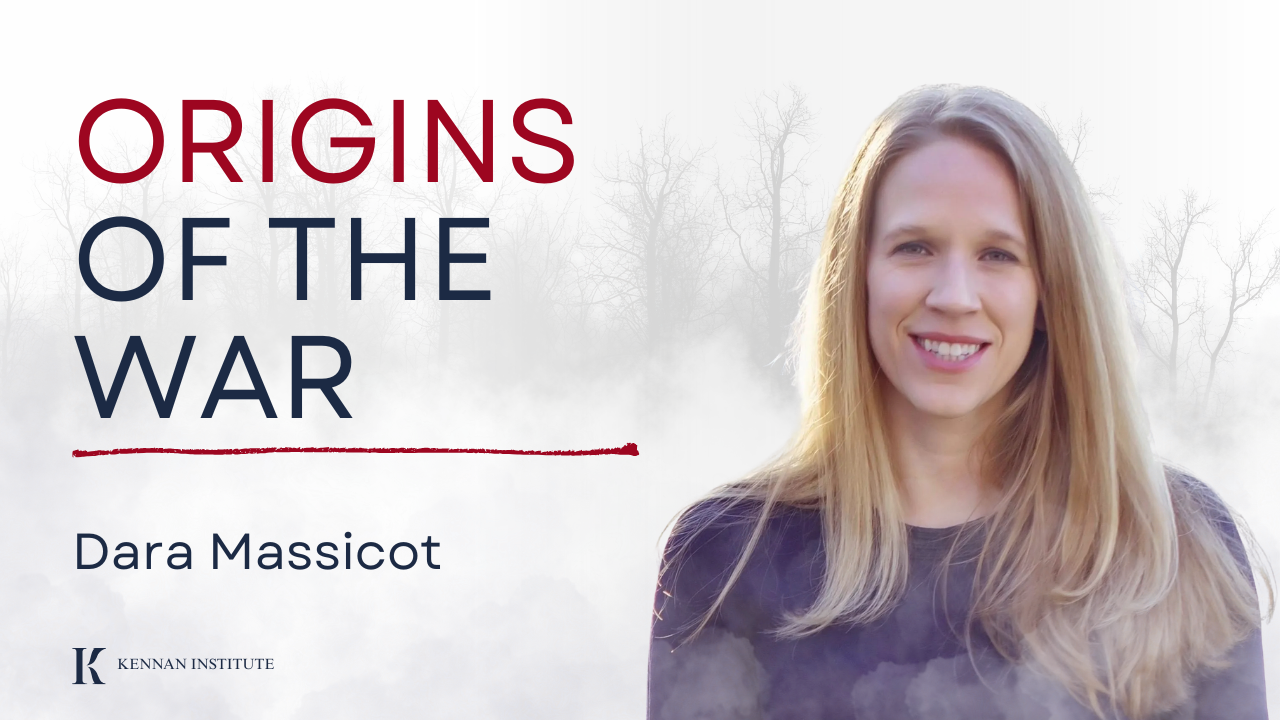
Origins of the War: A Conversation with Dara Massicot
A conversation with Dara Massicot, of the Carnegie Endowment, on the evolution of the Russian military after the collapse of the Soviet Union in 1991, the development of Russian strategy and the various conflicts, from Chechnya to the annexation of Crimea in 2014, that laid the foundation for Russia's decision, in 2022, to launch a full-scale invasion of Ukraine.
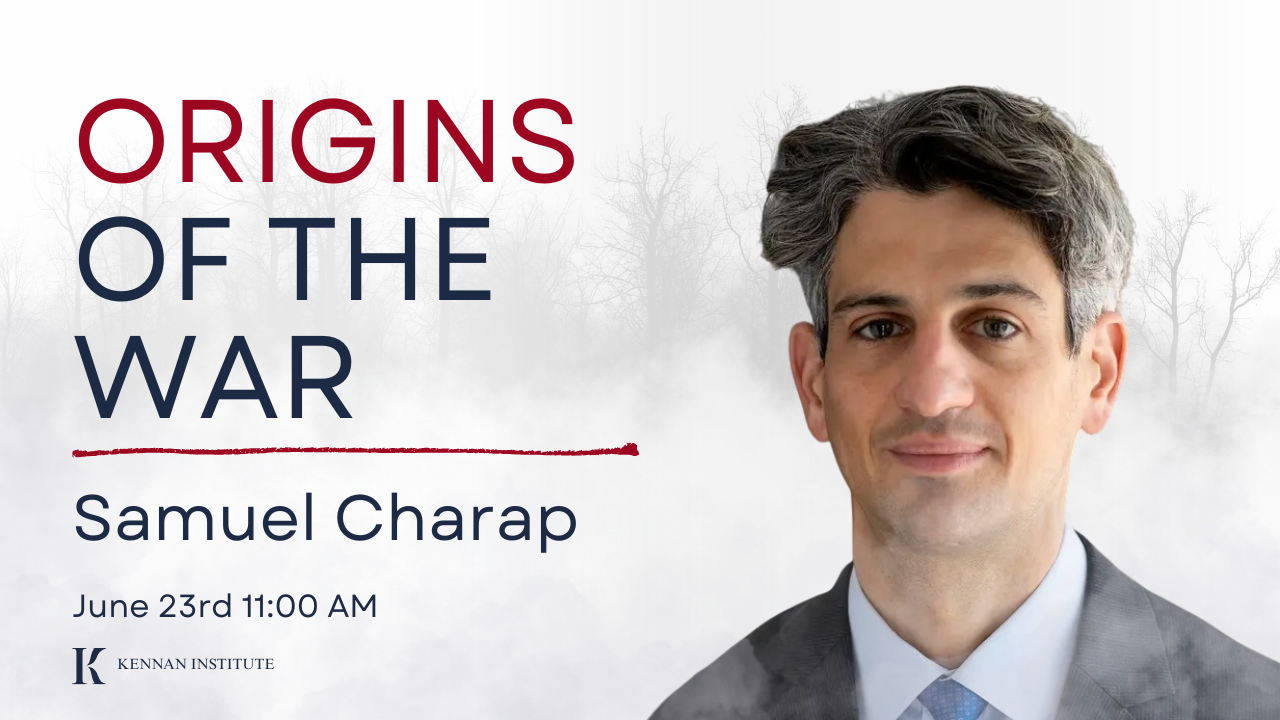
Origins of the War: A Conversation with Samuel Charap
A conversation with Samuel Charap, of the Rand Corporation, on the origins of the war, with a focus on the development of Russian foreign policy after 2012, on the European security architecture after 1991 and on the place of Ukraine in U.S. foreign policy. This conversation emphasizes questions of nuclear strategy and nuclear non-proliferation in relation to the origins of Russia's 2022 invasion of Ukraine.
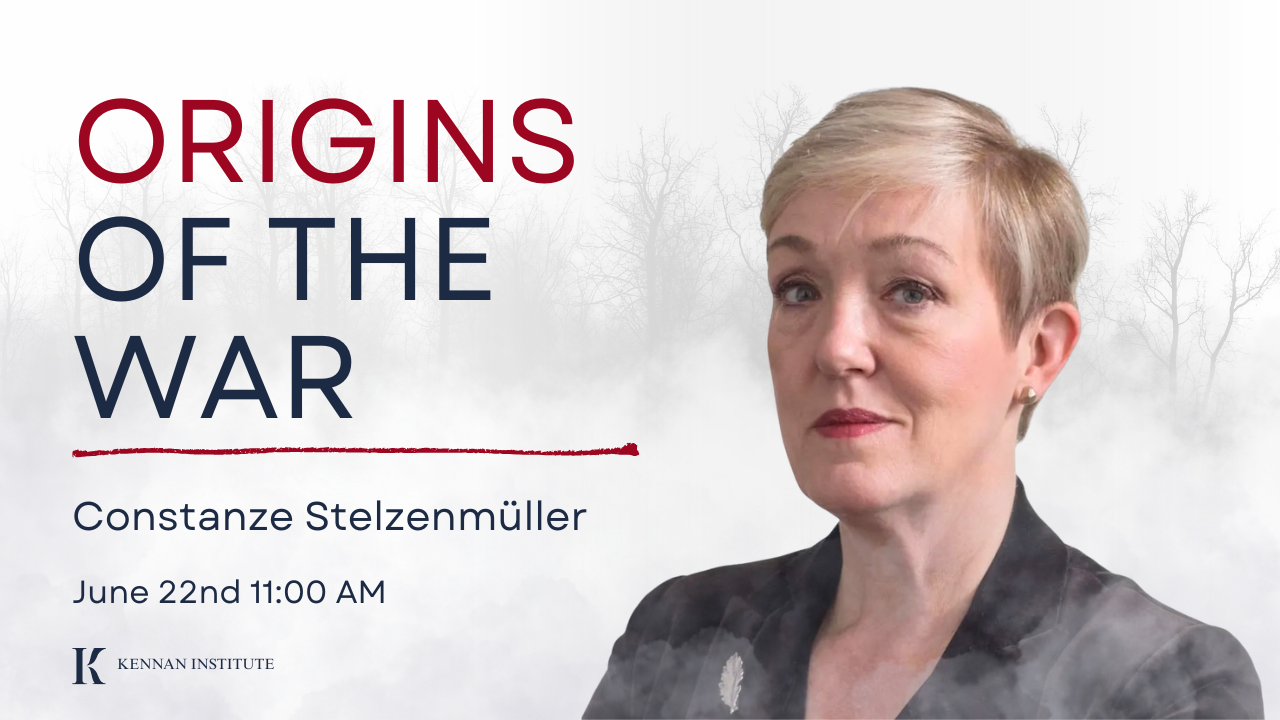
Origins of the War: A Conversation with Constanze Stelzenmüller
A conversation with Constanze Stelzenmueller, of the Brookings Instittuion, on the origins of the war, with particular focus on the evolution of European policy toward Eastern and Central Europe after 1991 and on the role of Germany in "Minsk" diplomacy in 2014 and 2015. This conversation places the origins of the war in a European and transatlantic context.

"'Kievan Rus'" Is Ours: National Memory and Russia’s Invasion of Ukraine
A conversation with sociologist Ekaterina V. Klimenko, affiliated scholar at the Center for Eurasian, Russian and East European Studies at Georgetown University, on the uses of medieval history in Russian politics and Russian foreign policy. Alicja Curanovic, professor at the University of Warsaw, serves as a respondent.
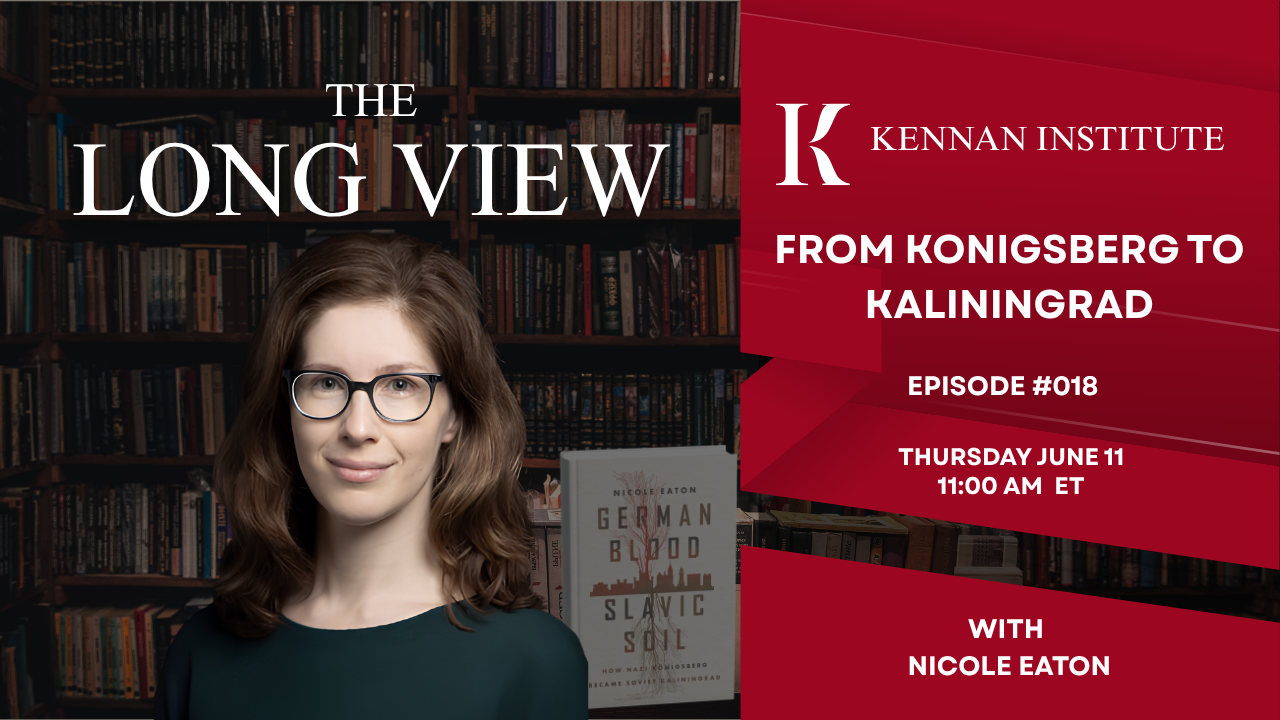
From Konigsberg to Kaliningrad
A conversation with the historian Nicole Eaton, a professor of history at Boston College, on her new book, German Blood, Slavid Soil.
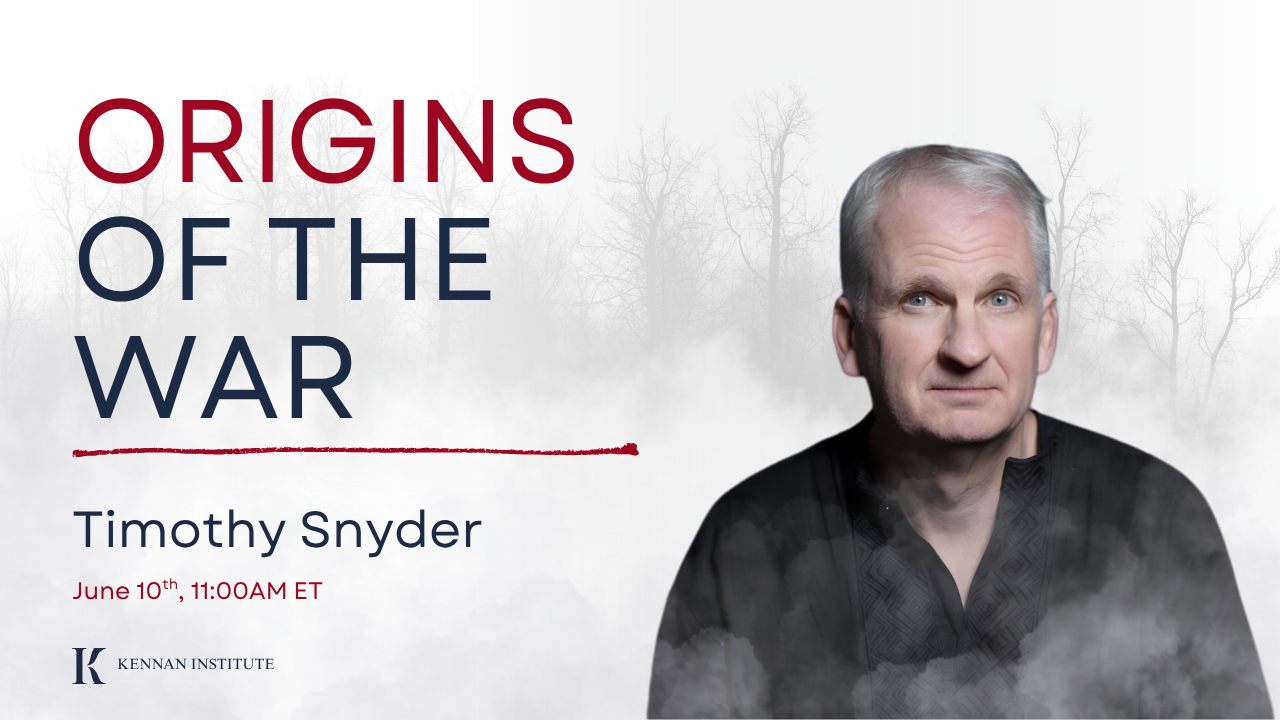
Origins of the War: A Conversation with Timothy Snyder
A conversation with Timothy Snyder, a professor at the University of Toronto, and author of many pioneering books on the history of Eastern and Central Europe. This conversation focuses on the status of Ukraine in Europe, on the evolution of Russian foreign policy under President Vladimir Putin and the reasons for Russia's invasion of Ukraine first in 2014 and then, on a much larger scale, in 2022.
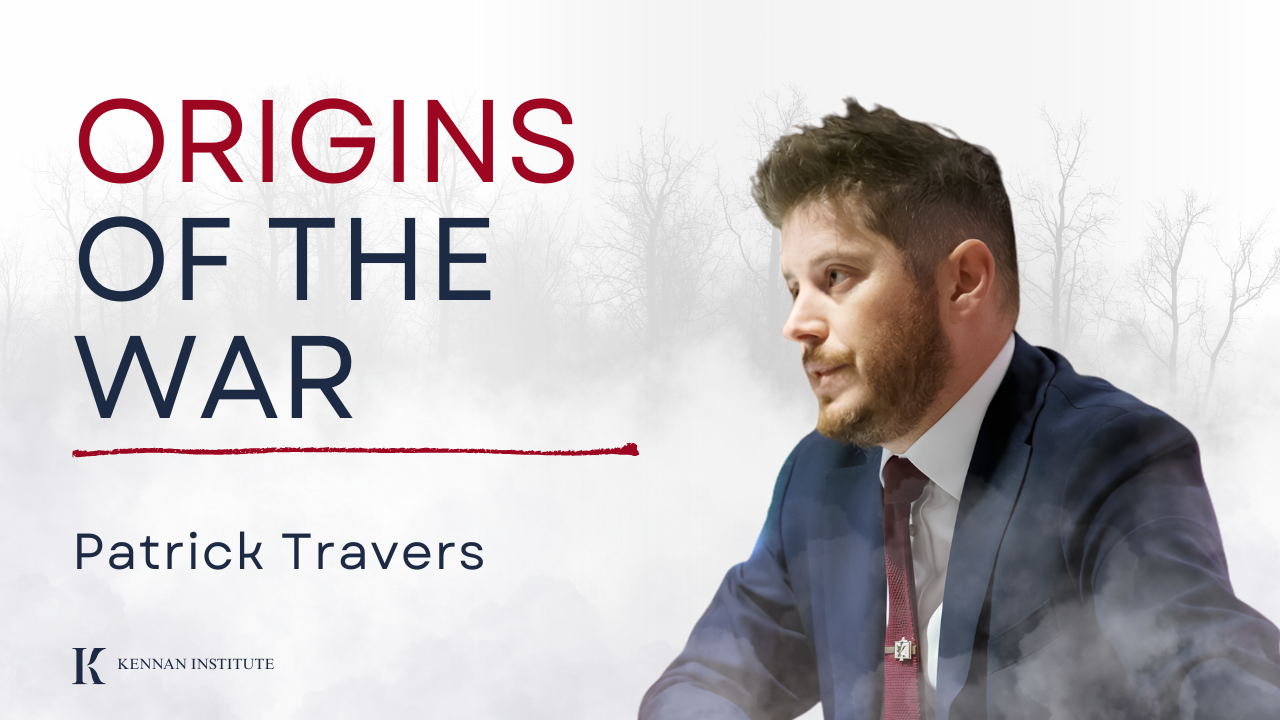
Origins of the War: A Conversation with Patrick Travers
A conversation with Patrick Travers, former advisor to the Canadian Prime Minister, on the origins of the war, on policy choices made by Canada and its allies and on assessments of Russia's motivations for its 2022 invasion of Ukraine.
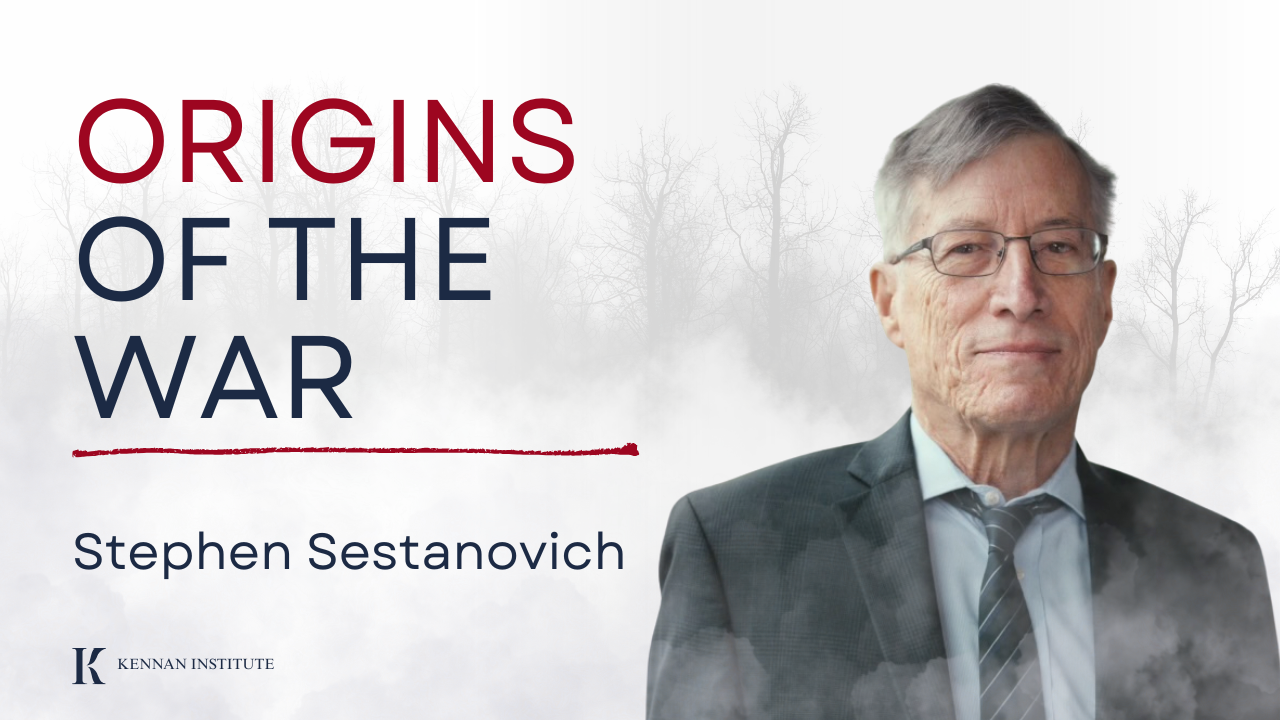
Origins of the War: A Conversation with Stephen Sestanovich
A conversation with Stephen Sestanovich, of the Council on Foreign Relations, on the long arc of U.S. policy toward Russia, the evolution of Eastern and Central Europe after the end of the Cold War and the motivations held by Russian President Vladimir Putin for invading Ukraine in February 2022.
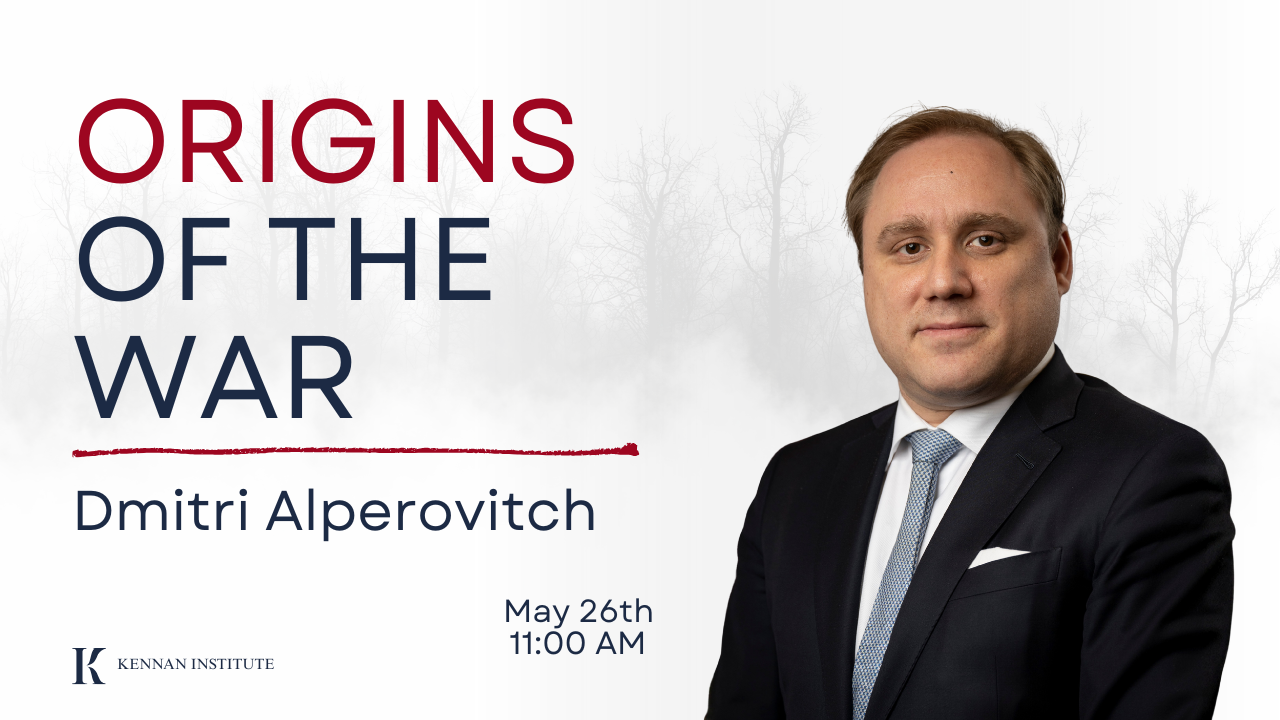
Origins of the War: A Conversation with Dmitri Alperovitch
A conversation with Dmitri Alperovitch about his recent book, World on the Brink, exploring the roots of the war in Ukraine through a global lens, linking the war in Europe to scenarios of a possible invasion of Taiwan.
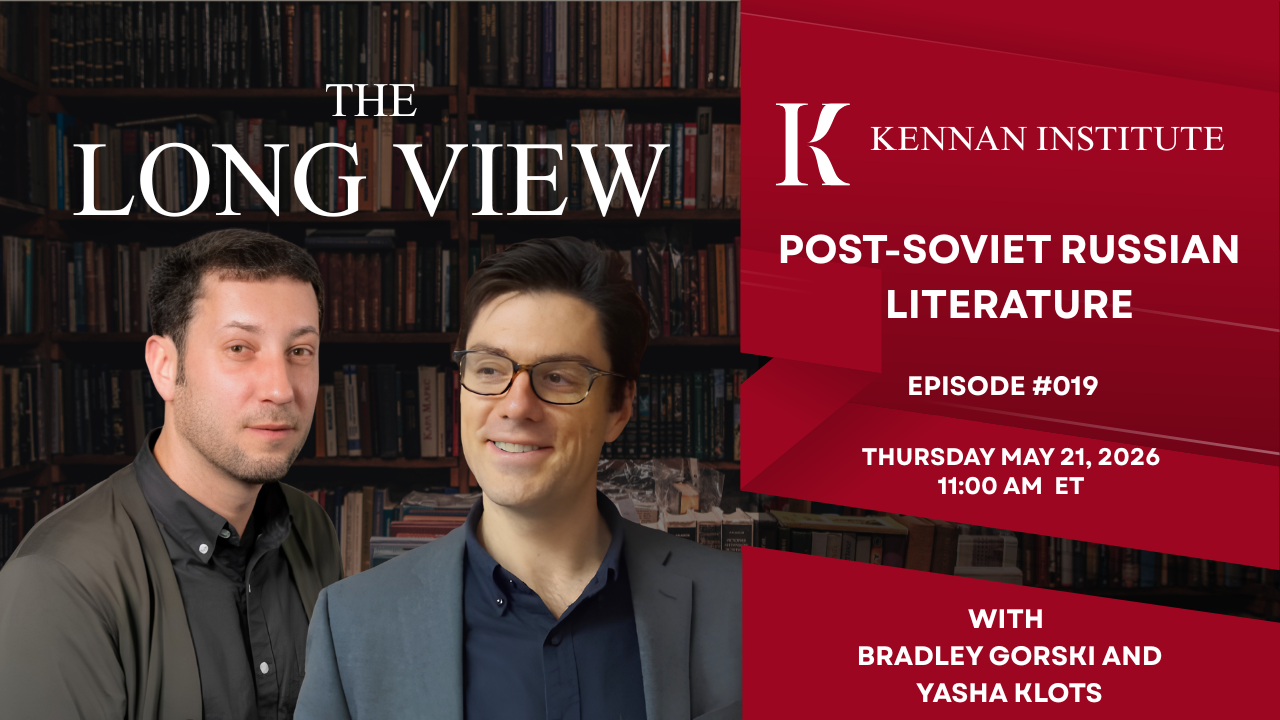
Post-Soviet Russian Literature
A converastion with Bradley Gorski, a professor of literature at Georgetown University, and Yasha Klots, a professor of literature at Hunter College, on the literary scene in Russia after the fall of the Soviet Union.
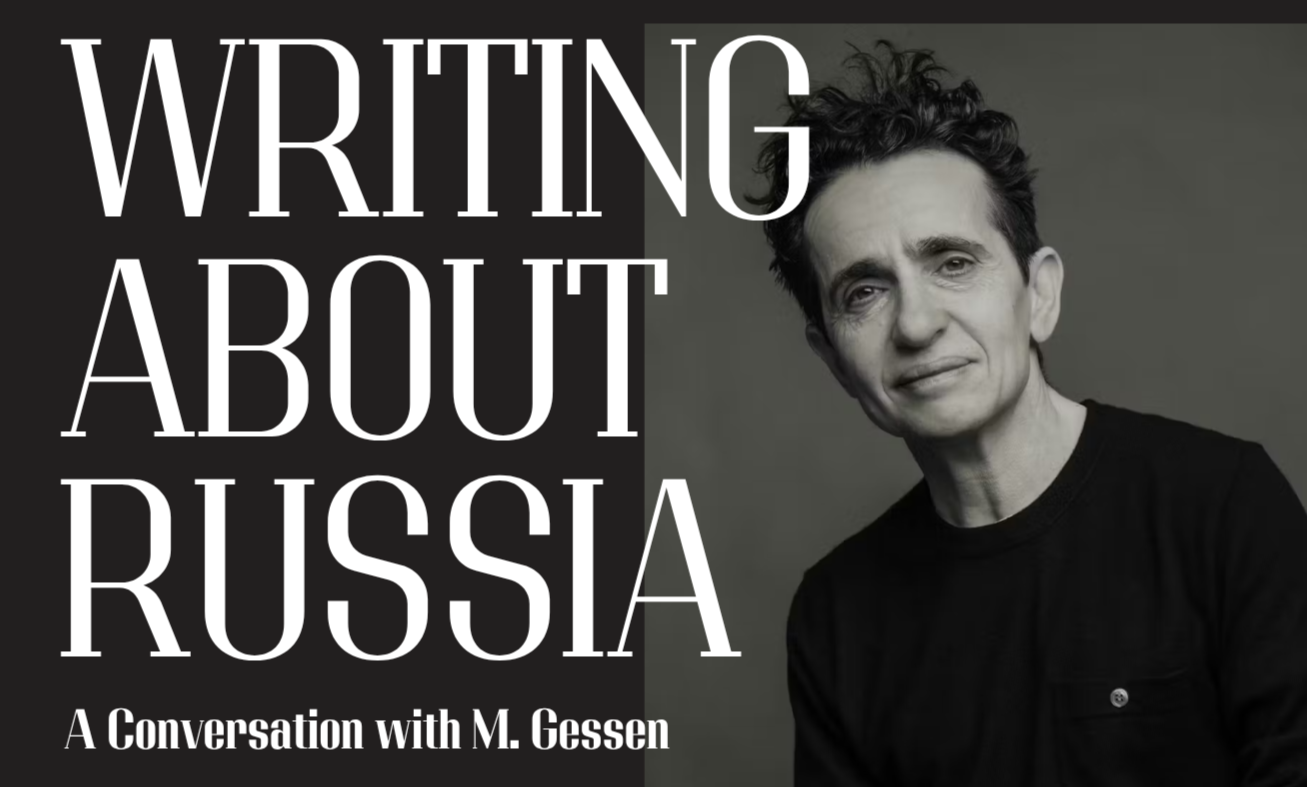
Writing about Russia: A Conversation with M. Gessen
A discussion with Times opinion columnist M. Gessen, author of eleven critically acclaimed books, host of "The Idiot" podcast, and winner of the 2026 Pulitzer Prize in Opinion Writing.
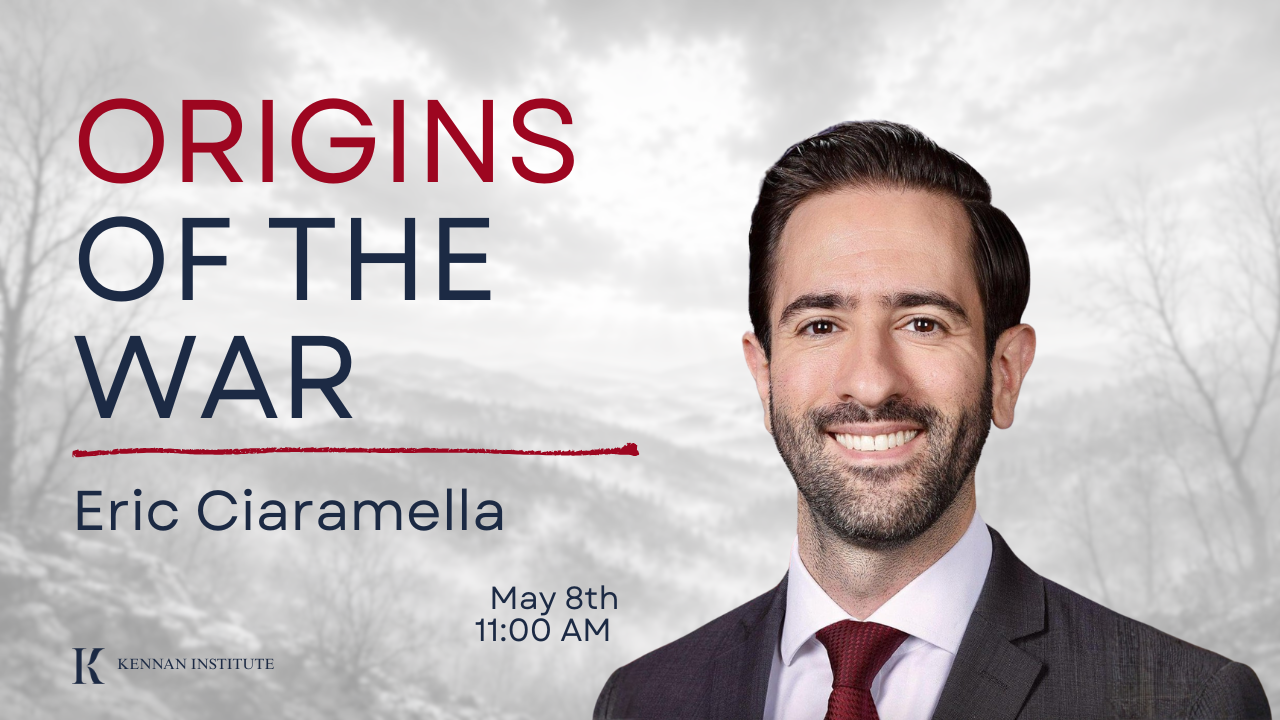
Origins of the War: A Conversation with Eric Ciaramella
A conversation with Eric Ciaramella, of the Carnegie Endowment for International Peace, on the long arc of U.S. policy toward Ukraine, focusing first on 2013-2014 and the first round of conflict between Ukraine and Russia and continuing with the lead-up to Russia's full-scale invasion of Ukraine in 2022. This conversation foregrounds questions of information, assessment and analysis.
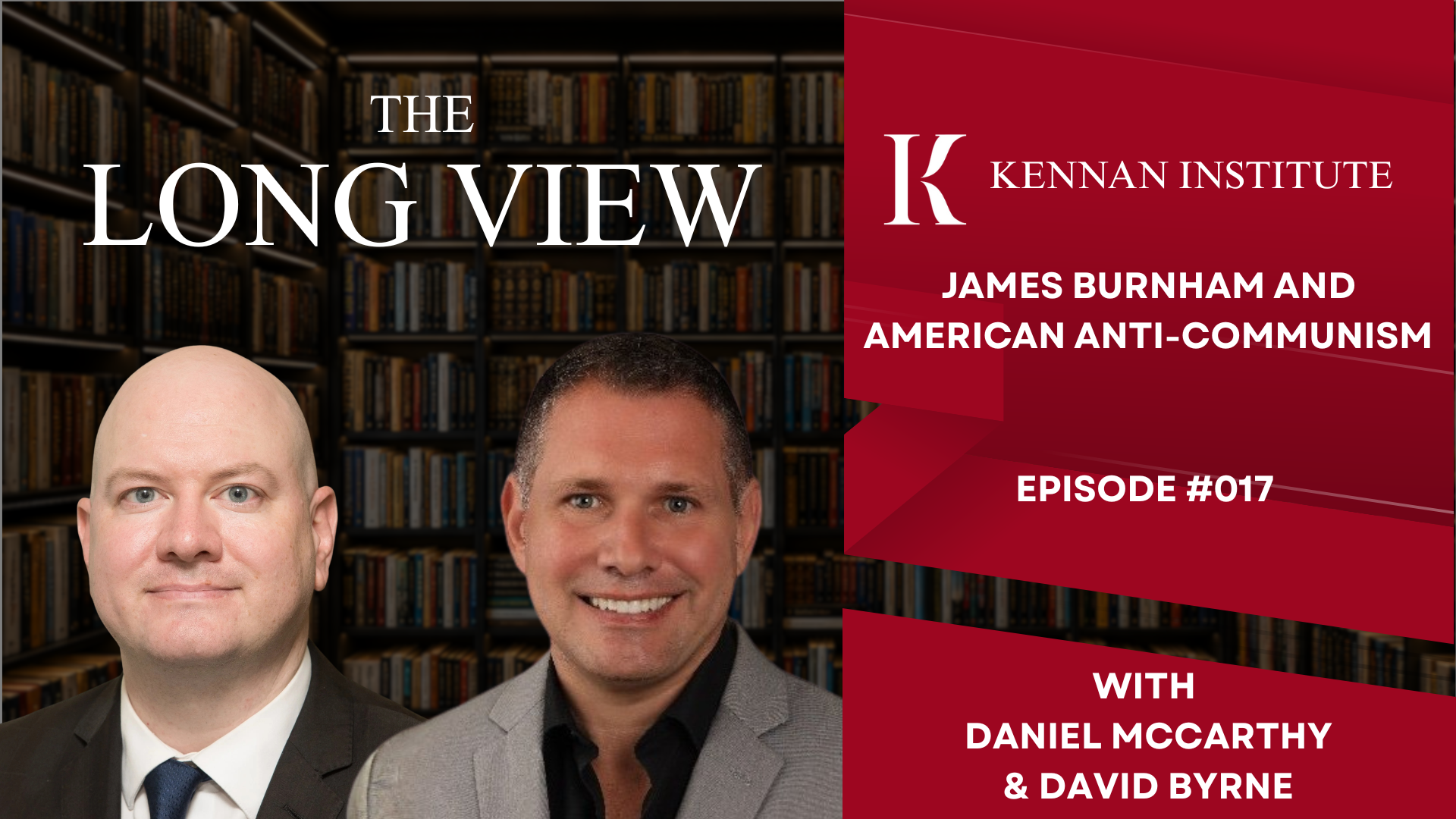
James Burnham and American Anti-Communism
A conversation with Daniel McCarthy, an Advisory Council member of the Kennan Institute, and David Byrne, a historian and author of the book, James Burnham: An Intellectual Biography. This conversation explores the long career of James Burnham, his relationship to Leon Trotsky and his articulation of an anti-communist policy for the United States at the outset of the Cold War. It looks as well at Burnham's contributions to the American conservative movement, from Barry Goldwater to Donald Trump.
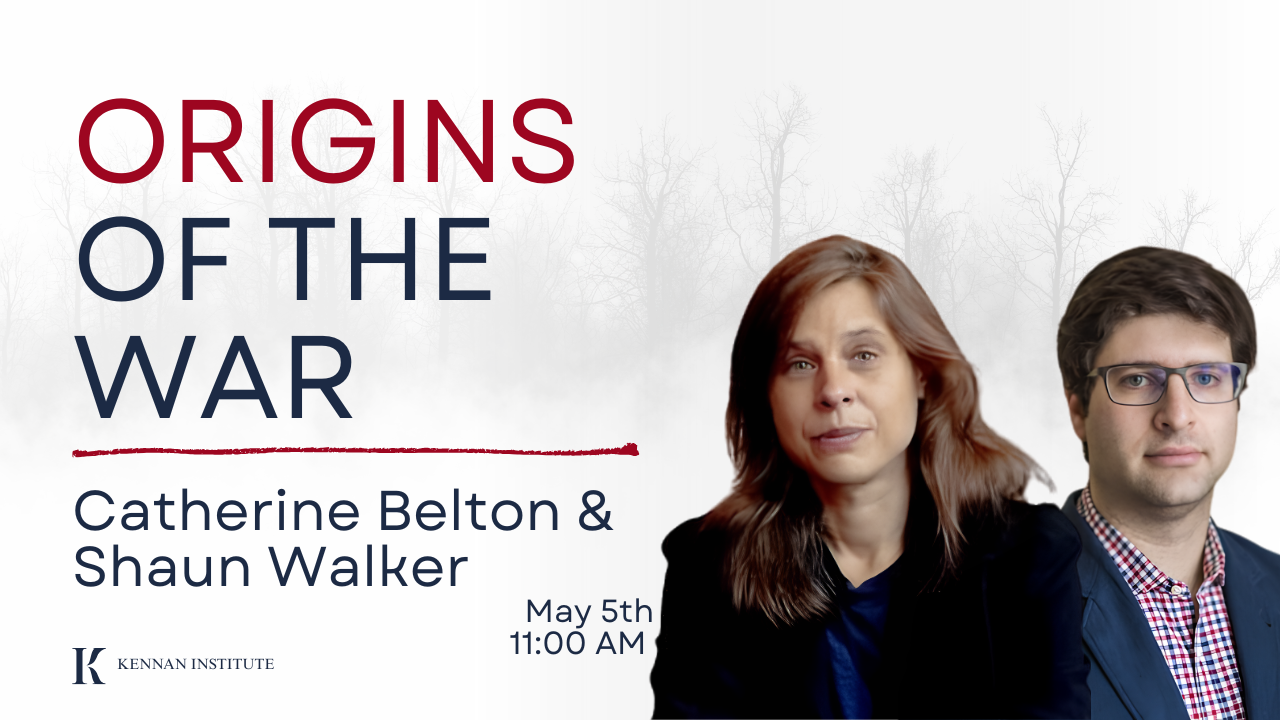
Origins of the War: A Conversation with Catherine Belton and Shaun Walker
A conversation with Catherine Belton, of the Washington Post, and Shaun Walker, of The Guardian, on the origins of the war. This conversation looks into the role intelligence played prior the war, the U.S. assessmeent that Russia would invade and the divergent assessments of other countries, including Ukraine, about when or whether the war would take place.
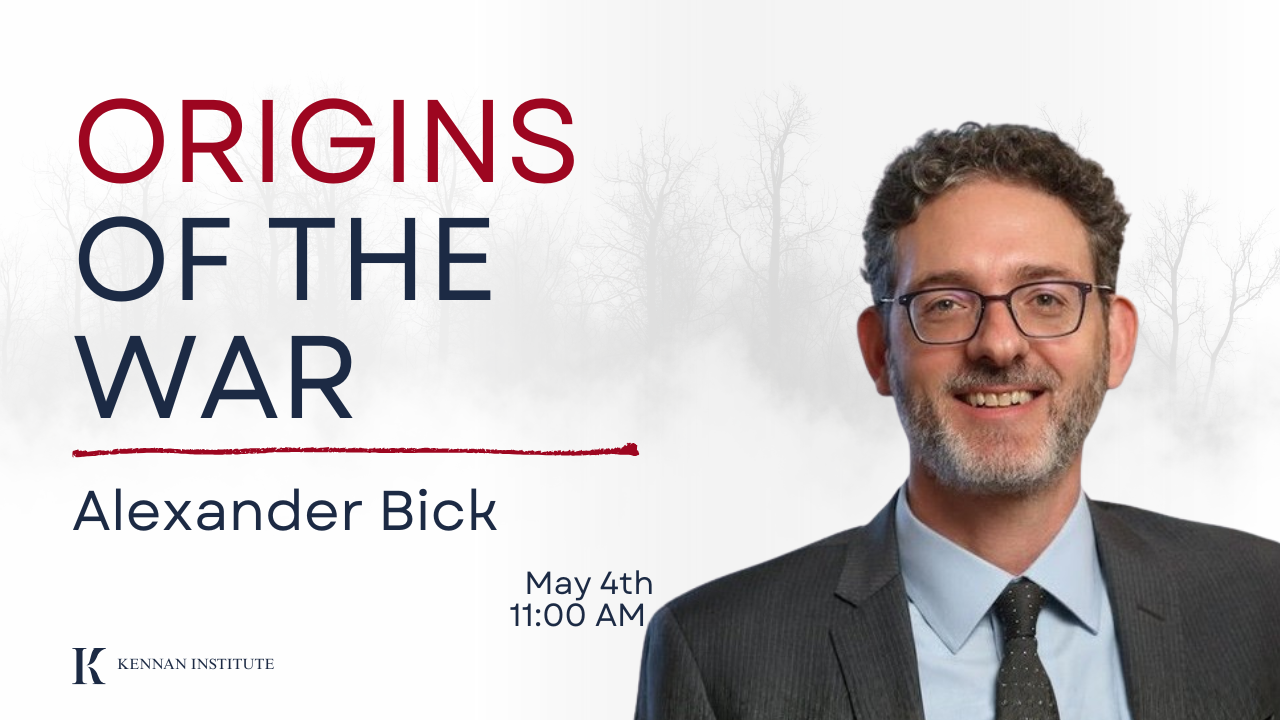
Origins of the War: A Conversation with Alexander Bick
A conversation with Alexander Bick, a professor at the University of Virginia who served on the National Security Council in 2022, about the origins of the war, about policy choices made by the United States and about assessments of Russian actions and motivations in the lead-up to Russia's 2022 invasion of Ukraine.
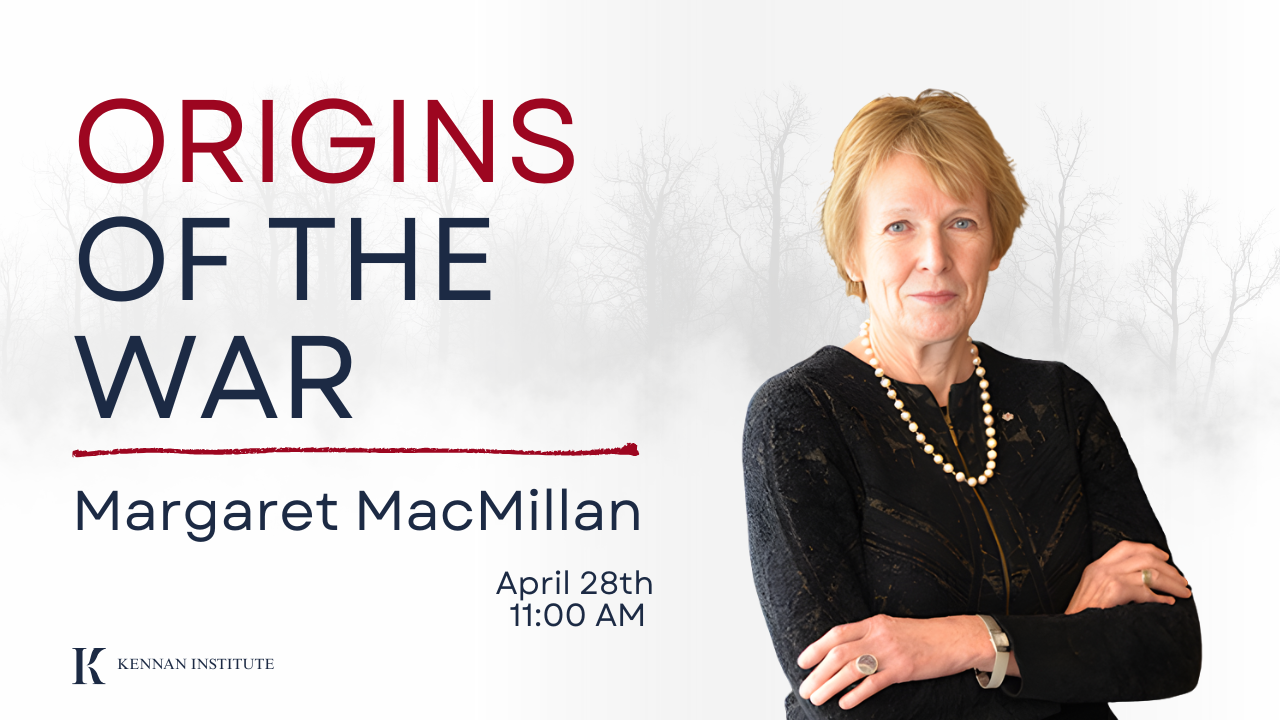
Origins of the War: A Conversation with Margaret MacMillan
A conversation with the historian Margaret MacMillan, emeritus professor of history at the University of Toronto and at Oxford University, and author of many books on the history of war. This conversation will place a special emphasis on the evolution of the nation state in the eighteenth century, the role of the nation state in European history before and after World War I and the ways in which this "deep history" have shaped Russia's serial invasions of Ukraine since 2014.
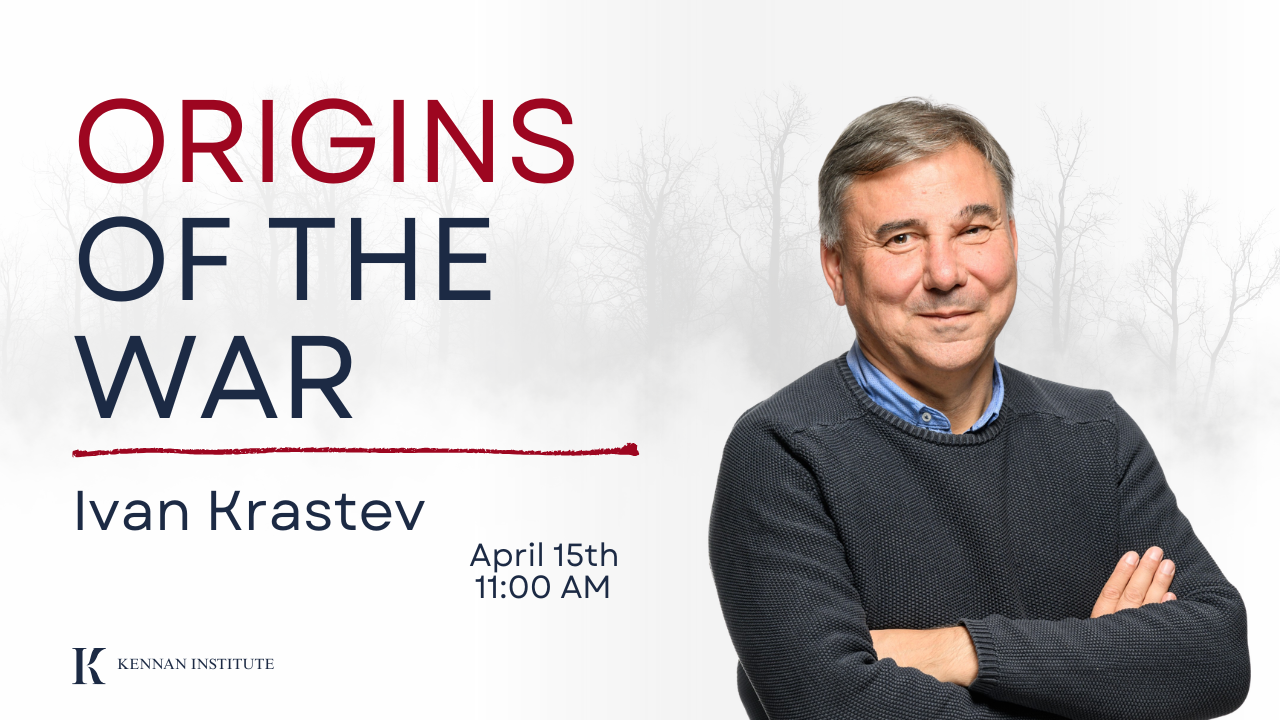
Origins of the War: A Conversation with Ivan Krastev
A conversation with Ivan Krastev, chair of the Centre for Liberal Strategies in Sofia, on the origins of the war in Urkaine, with special attention to paid to the European dimensions, to the growth of the European Union in the 2000s, to the evolving relationship between Ukraine and Europe in 2013-2014 and to Europe's relations with Russia prior to Russia's 2022 invasion.
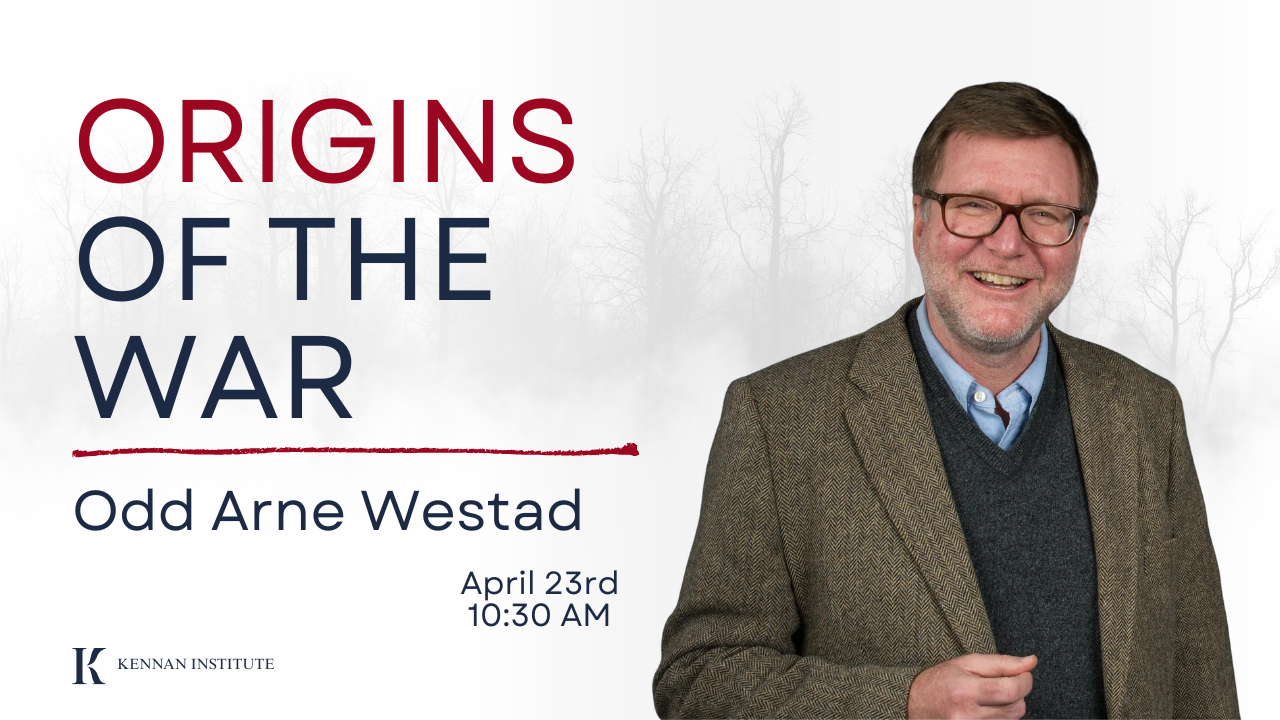
Origins of the War: A Conversation with Odd Arne Westad
A conversation with Odd Arne Westad, a historian of the Cold War at Yale University, that focuses on the end of the Cold War, on the many ways that the Cold War did not end between 1989 and 1991 and on the deep historical origins of the Russian invasion of Ukraine in 2022, with an emphasis on the global factors that have shaped Vladimir Putin's decision making.
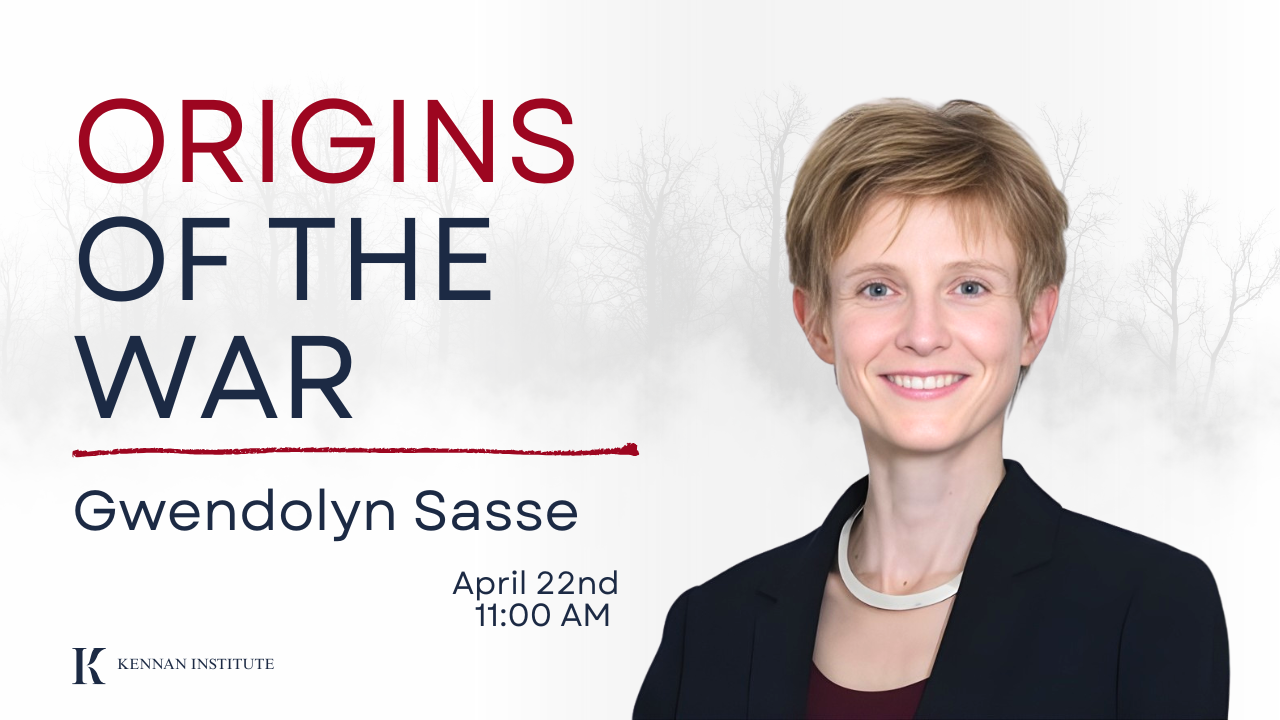
Origins of the War: A Conversation with Gwendolyn Sasse
A conversation with Gwendolyn Sasse, Director of the Centre for East European and International Studies, and author of Russia's War against Ukraine, a book published by Polity Press in 2023. This conversation explores the history behind Russia's 2022 invasion of Ukraine.
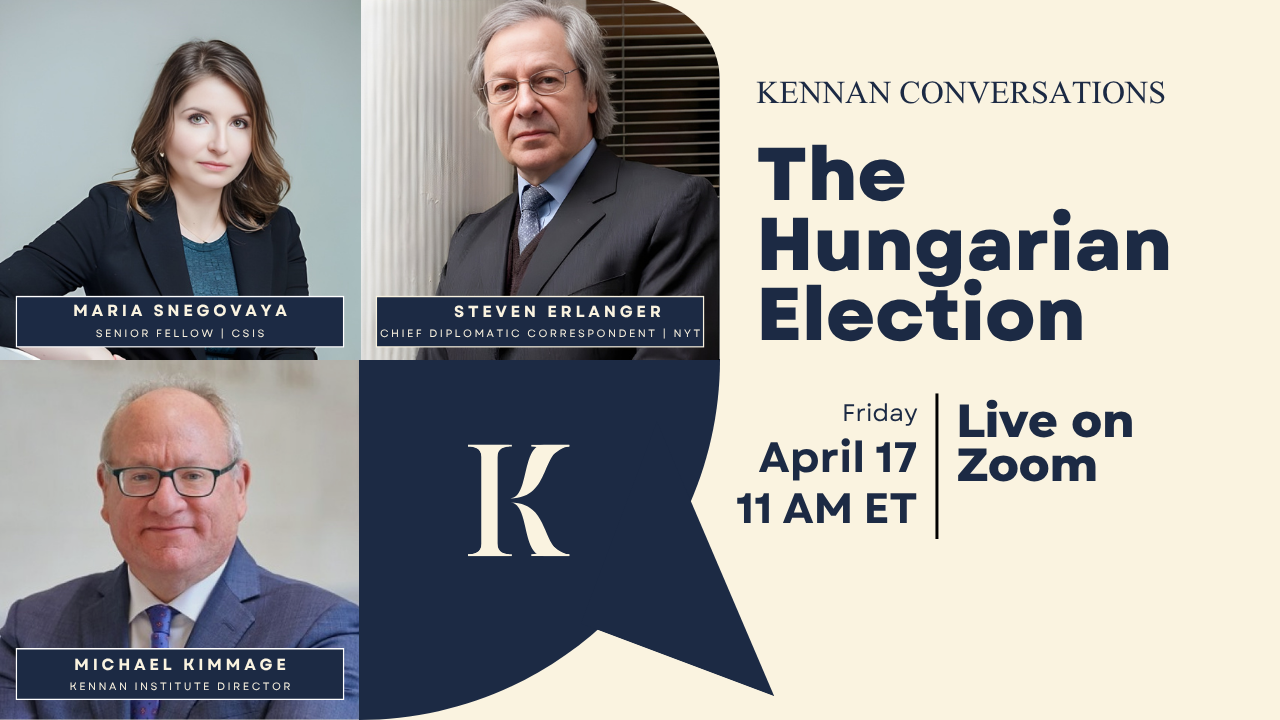
The Hungarian Election: Implications for the War in Ukraine
The recent defeat of Viktor Orban will have implications felt across Europe and in Ukraine. This conversation explores the configurations of European politics, as reshaped by this election, from the foreign policy of the European Union to the structures of European support for Ukraine. It also examines attitudes in Moscow, which had openly backed Prime Minister Orban's re-election bid and had construed Hungary under Orban as a relatively friendly European country. This conversation looks at Vladimir Putin's likely response to this election and to a Europe that will be less amenable to Russian influence in the future.
Artwork by Kazimir Malevich and Wassily Kandinsky