
Part 1: Georgia’s Fading “Dream” (Draft for Review)
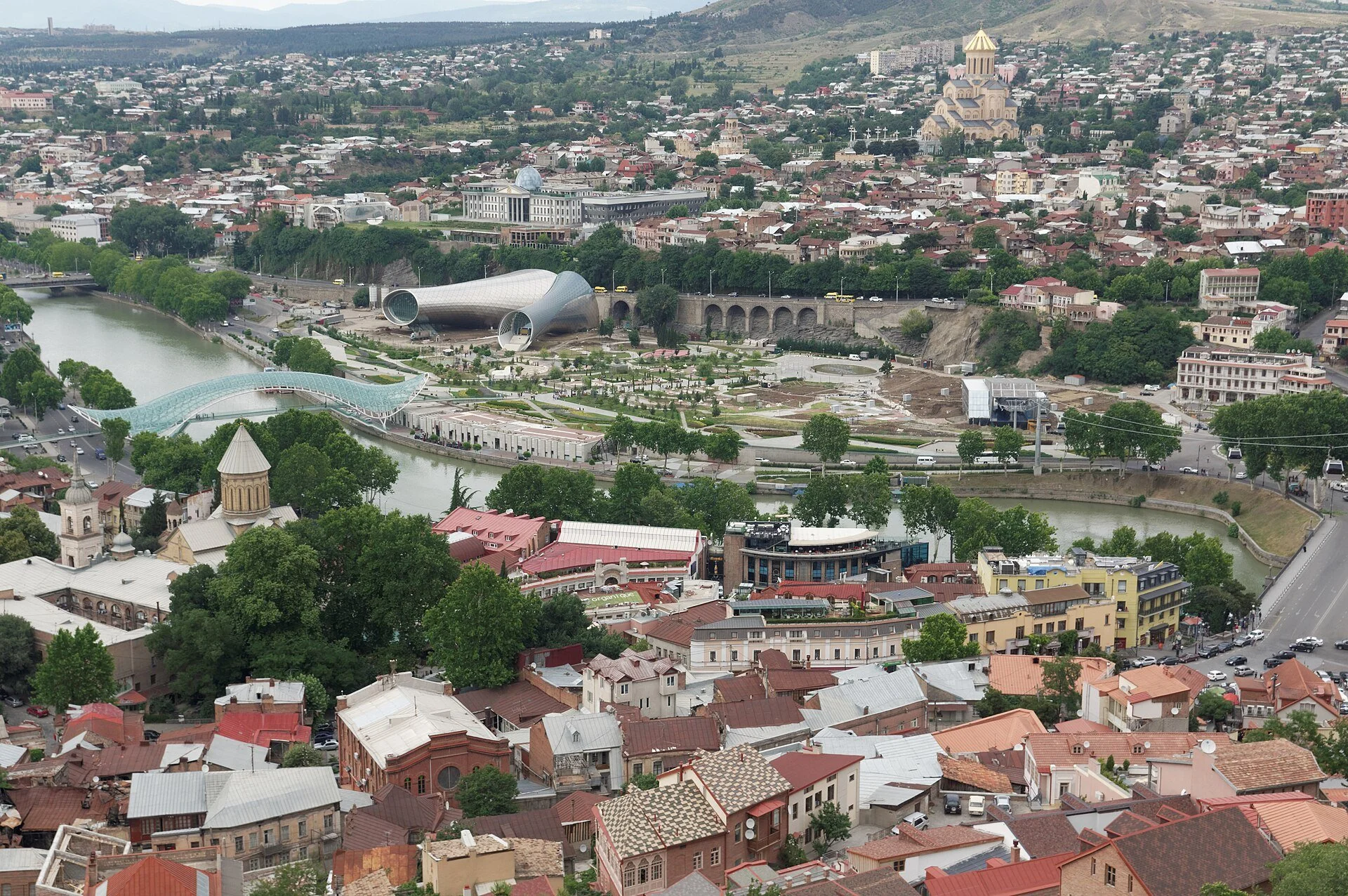
Tbilisi, Georgia. Photo by Vyacheslav Argenberg (June 24, 2014.)
Arriving in Tbilisi in early March, I was looking forward to meeting friends and colleagues and to interviewing a number of Georgians. They could help me understand what I knew from several previous trips to Georgia was a rapidly deteriorating political situation. I had a long list of politicians, academics, journalists, and civil society advocates to speak with.
These days in Georgia friends are not always available. The evening of my arrival, I had dinner plans with a colleague and friend, but as I turned on my mobile I saw a new text. After continuous harassment, interrogations, and accusations of treason and “spying for foreign countries,” my friend had left the country.
Many opposition leaders are or have been in prison. Some have fled the country to avoid arrest. With disarming insouciance even in the most dire political circumstances, most of the people I planned to talk with were willing to share their thoughts about the country they love and about their fear of losing it.
“Georgia has never been this bad,” a lawyer friend told me. “Georgia’s traditional friends have been replaced by authoritarian regimes. The strategic partnership agreement with the United States has been halted, the European integration process also has been halted. Georgia’s European and NATO integration aspirations have been thwarted. At the same time, we see significant acceleration of Georgia’s relationship with Communist China…and rapprochement with Iran.”
I arrived just as the Hudson Institute released a bombshell report, “Georgia’s Iranian Turn: Tehran’s Rapid Expansion of Influence in a Once-Committed US Ally.” It examines in detail Iran’s “expanding influence in Georgia,” concluding that “Tbilisi is facilitating Iranian penetration while allowing Tehran to build an extensive network of influence infrastructure.” The ruling party, Georgian Dream (usually referred to in English as “GD”) was furious, accusing the report’s authors of being “traitors to Georgia.”
Six leaders from four opposition parties, along with two former politicians, have been jailed, beginning last year, charged with “crimes against the state.” A well-known female opposition politician, Elene Khoshtaria, was arrested in September 2025 and sentenced to one-and-a-half years in prison for “property damage.” She had written “Russian Dream” on a campaign poster for Tbilisi’s mayor, who also is a GD leader. A GD member of parliament stated she was jailed not because of what she had written on the poster but because of the “revolution scenario” that she was part of.
Khoshtaria was confined in the Rustavi Women’s Penitentiary Facility No. 5, and the authorities brought more charges against her: sabotaging Georgia’s foreign policy; assisting a foreign state or organization in hostile activities; and financing activities against the constitutional order and national security, which carries a sentence of up to fifteen years. Her health deteriorated and, still in custody, she was admitted to a special clinic in the prison.
The penitentiary service denies that her health was affected and claimed she has been given adequate medical care, but in June the European Parliament adopted a resolution condemning what it called “degrading and inhuman treatment" and demanded her “immediate and unconditional release and the immediate withdrawal of politically motivated charges against her.”
I was hoping to have lunch with Nika Gvaramia, a 49-year-old lawyer and media manager who heads the pro-European Akhali party (the word means “new” in English) and, luckily, it was still on. He was released from prison the previous month after serving eight months, his fourth time behind bars on what Western observers call politically motivated charges. He strode into the restaurant looking surprisingly chipper.
“So, you’re not going to leave?” I asked him. “Oh, no, definitely not,” he replied, “because it’s our historical fight and we are – I think – it looks like the end of this fight. And either way, we are winning.”
“You think you’re winning?” I asked incredulously. “I’m sure we will prevail,” he said. “I have no doubt whatsoever. I can’t even imagine that my country will be part of Russia. The world is changing, despite the fact that its pretty much strange, but difficult times always are strange.”
He was not tortured in prison, Gvaramia assured me. “They do not need political prisoners. It’s a heavy burden. They need quiet politicians, quiet opposition leaders. But no way!” Gvaramia maintains that the current GD-controlled government is turning Georgia into a failed state, carrying out a long-held goal of Russian president Vladimir Putin. Georgia, he told me, is at a “U-turn” in its democracy. And yet, he said, and even though “somethings are awkward and nasty,” change opens the opportunity for Georgia to finally fulfill its “real destiny” as a key corridor from the Caspian region to Europe through the Black Sea. “This is a moment that may never come again,” he said, “so we have no right to lose this opportunity, and I am sure that we will not.”
I countered with a litany of reality tests: GD’s repression of the opposition; violent suppression of protests; growing numbers of Georgians emigrating; politicians in jail; increasing influence of Russia, of Iran, of China; and disunity among opposition politicians.
At that, he jumped in with a wry smile: “Oh, that’s very Georgian!”
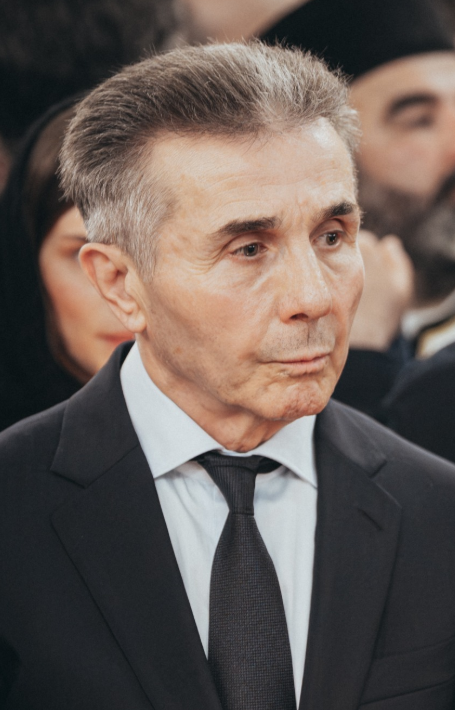

Bidzina Ivanishvili, the richest man in Georgia and former Prime Minister. Photo by President of Georgia (March 18, 2026).
.png)
Political and personal infighting has hobbled a cohesive opposition movement. As a politically savvy colleague told me, “some opposition leaders hate each other more than they hate Ivanishvili.” During a visit in 2024, I reported on efforts by then-president Salomé Zourabichvili’s “Georgian Charter” to bring the eternally-divided opposition leaders together. In March of this year, nine parties announced they were joining a new alliance against the GD. There is no consensus on uniting behind one opposition leader, and Gvaramia believes there should not be one. “If you have one and only leader you are giving a target to propaganda. You need moving targets which, when you are shooting, is much, much tougher. It’s strategic vagueness. Bidzina (Ivanishvili) likes strategic vagueness. We are answering that.”
No conversation in Georgia is complete without a mention of Bidzina Ivanishvili, a rags-to-riches Georgian who made billions in Russia during the early post-Soviet privatization period of the 1990s. He is the wealthiest and most powerful man in Georgia, founder and currently honorary chairman of the GD party. Almost everyone calls him simply “Bidzina.” His Tbilisi residence, a futuristic, space-ship mansion known as the “Glass Palace” looms over the capital from a hilltop near the Botanical Garden.
A notoriously reclusive leader, he and his party rule Georgia with an increasing stranglehold on human rights. In December 2024, the United States sanctioned him for “undermining the democratic and Euro-Atlantic future of Georgia for the benefit of the Russian Federation.” “We strongly condemn Georgian Dream’s actions under Ivanishvili’s leadership,” the U.S. State Department announced, “including its ongoing and violent repression of Georgian citizens, protestors, members of the media, human rights activists, and opposition figures.”
Nika Gvaramia told me Ivanishvili uses many of the same repressive methods employed by Soviet rulers and by Vladimir Putin. Ever the optimist, he reminded me that the Soviet Union was ultimately defeated and, he predicted, both Russia and “Bidzina” will be, too: “This kind of regime, this kind of repression, it’s nothing new. We don’t have to be afraid. If you are afraid of imprisonment, even some kind of physical assault, you are not prepared for fighting Russia. It’s an historical fight.”
Gvaramia is convinced that Georgia will join the European Union. Europe needs a link to the Black Sea, he explained, and Georgia is that link. The impediment is Ivanishvili. “He’s been here for 15 years, that’s enough. I give him one more year.” Ivanishvili will not simply vanish from the political scene, as Gvaramia sees it. Once the GD leader is defeated, he said, Ivanishvili should be given “guarantees,” but there should be no prosecution: “If they are stronger than us, let them win, but let it be with free and fair elections, with neutral courts and neutral judges.”
One opposition leader I did not expect to see in Tbilisi was Giorgi Gakharia, Georgia’s former prime minister, founder of the Gakharia for Georgia party. I had met with him on several previous trips and was intrigued by his experience both as a top government official and as a veteran of Georgia’s bloody political wars. In January 2025, he suffered a concussion in a physical attack in the city of Batumi. The assailants fractured his nasal bone. His party blamed it on Ivanishvili and his GD followers. GD claimed Gakharia started the fracas. He now lives in Germany and from there is urging the United States and other countries to condemn Russia’s military occupation of Georgia’s Abkhazia and Tskhinvali (also known as South Ossetia) regions and Russia’s attempts to illegally annex them.
That evening, I watched a Georgian opposition TV channel; the few that remain are under intense pressure from the government. I saw live video of five opposition politicians standing should to shoulder – Nika Gvaramia among them – and in the center a young politician I was scheduled to meet the next day: Tina Bokuchava, one of the most vocal critics of the GD, former member of Parliament, and chair of the United National Movement (UNM). After Georgia Dream and Coalition for Change (a pro-Western liberal coalition) it is the country’s third-largest party.
UNM is pro-EU and pro-NATO, but it is a lightning rod among the opposition. Founded by former president Mikheil Saakashvili in 2001, two years before his Rose Revolution, the party introduced a series of major reforms. Over time, Saakashvili was accused of abuse of power. As a result, UNM lost to Ivanishvili’s GD. Saakashvili’s political history has been extraordinarily complex, even including at one point being appointed governor of Odesa, Ukraine. He was convicted of abuse of power and jailed in 2021, confined to a private medical clinic because of ill health, convicted of embezzlement in 2025, then moved from the clinic back to prison. He has denied all charges.
Georgian politics can resemble a Shakesperean tragedy, with brief moments of comedy. As I sipped a latte with Tina Bokuchava, she displayed a steely, almost lawyerly balance of mind. “I was always in the opposition,” she explained. Now forty-three, she left Georgia for the United States at age fifteen to study political science at Smith College and received a master's degree in diplomacy and international law from the Fletcher School of Law and Diplomacy at Tufts University.
Ivanishvili’s goals are the same as Putin’s, she stated flatly: derail Georgia’s EU accession and foreclose any possibility of Georgia’s ever joining NATO, leaving the country in international isolation. “So, we are left at the behest of the Russians, where Georgia is a kind of grey zone that they can use for money-laundering purposes, which they are doing now, where they can use Georgia for sanctions-evading purposes, which they are doing now, and all sorts of other illicit activities.”
Bokuchava and her family have been threatened and, in September 2025, her husband, a university professor, was kidnapped by masked men. The abductors forced him to make a statement apologizing to Ivanishvili’s son, Uta, for claims that he was homosexual. Bokuchava told me it was meant as a threat to her, for her outspoken criticism of Ivanishvili and his party: “It was a way to silence me. Intimidate me.” It didn’t work; she went public.
“Did you ever consider leaving Georgia?” I asked her.
“The twenty-four hours before I made a public statement about my husband’s abduction, was the time when I considered that, maybe for the safety of my children, that would be the best decision to make,” she explained. “The threat was really quite direct: if I continued doing what I am doing, they knew where my kids go to kindergarten, they knew when my husband picks them up and drops them off, where my older one goes to school.” Like almost all the opposition, Bokuchava’s party did not consider the country’s 2024 parliamentary election in which GD took control of the government legitimate. Most western international observers called the election fundamentally flawed. An International Republican Institute (IRI) report describes what it calls: “suppression of civil society and opposition parties, and systematic voter intimidation.”
“It is impossible to change the government because of the overwhelming advantage of GD,” Bokuchava told me. In some areas in the regions, she said, unemployment is so high, that eighty percent of the people are employed in the state-funded public sector. “The instruction from the State Security Service is very clear: ‘The vote is tampered with, the state knows who you are voting for, and if you don’t vote pro-GD, you will be dismissed.”
This, she said, burdens the opposition, which must “rebuild trust with the public in terms of what we can accomplish jointly.” Time will tell whether they can do that, she said, but it is all the more reason for the opposition to find unity.
I set up a meeting with Zurab Japaridze, a libertarian and the founder of the Girchi party (“pinecone” in Georgian), who was released in December after seven months in prison. He showed up wearing a “USMC” (US MarineCorps) sweatshirt. He has a lot of friends in America, he told me and has a whole collection of caps and shirt from all branches of the U.S. military. It has become his trademark.
Prison in Georgia is not easy, he said, but quickly assured me that “it’s nothing like what Alexey Navalny (the Russian opposition leader who died in prison in February 2024) went through.” “It’s solitary confinement. It’s a small room, like a step or two forward or back. You’re alone, nobody talks to you. Prison guards are warned not to talk with you.”
“What about food?” I ask. “It’s crap,” he laughed. Prisoners are allowed six books a month but, he said, “It’s nothing, you can read six books in a week.” Friends can send books, and the prison had a small library. “Without books you go crazy. There’s nothing to do.” He eventually ended up reading about Soviet collectivization in 1953’s. “Some strange books!” he chuckled.
“We have more than 120 prisoners of conscience, most of them arrested after protests in 2024,” he said. “They’ve done nothing wrong. These are political trials, similar to what we had in Soviet times. They just bring a couple of policemen who say, ‘Yeah, I saw him doing something wrong.’ They plant drugs on them, and they’re sentenced to eight years.”
Japaridze calls himself a “radical,” but being “radical” in today’s Georgia means trying to speak out freely, he says. He faces up to fifteen years in prison. In his view, GD’sultimate purpose is to ban all opposition political parties and coalitions. “So why don’t they just put an end to all of this?” I ask. “Simply round up everyone? Arrest all the protesters?”
“Because every time they did it, and they did it terribly, more and more people came out,” he said. Would Japaridze leave Georgia? It is a moot point. The government has taken his passport and ID. He told me they hinted that, if he agreed to go, they might return his passport. But “I’m not going to leave. I’d rather spend the rest of my life in Rustavi prison than live outside the country… I have three children, that’s why I’m doing what I’m doing. I don’t want them to leave this country.”
Jill Dougherty is a Distinguished Fellow at The Wilson Center and Affiliated Scholar at the Center for Eurasian, Russian and East European Studies at Georgetown University.