Conditional Ownership: Russia’s Two Property Regimes
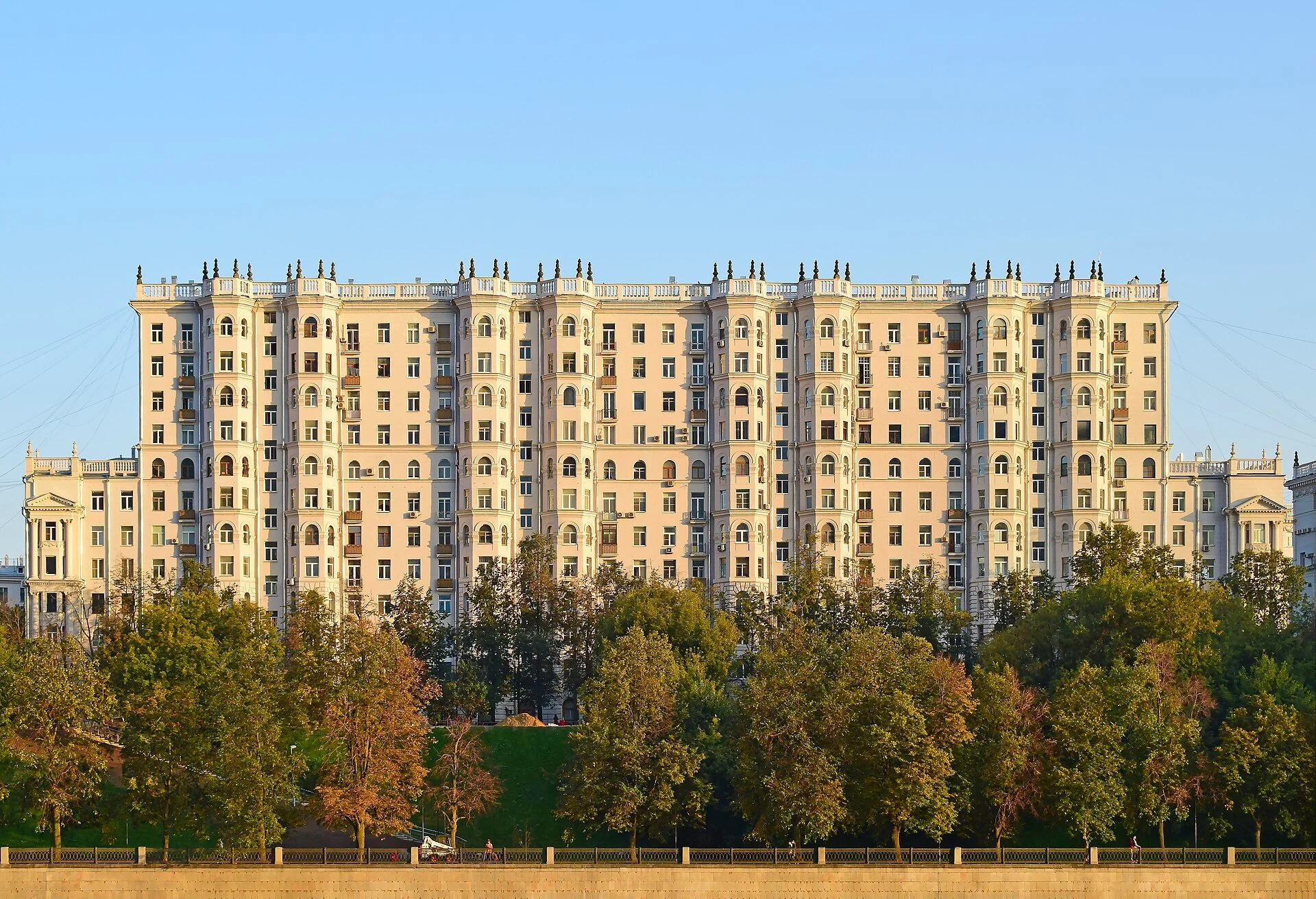
Apartments in Moscow, photo by Юрий Д.К. (August 2024)
Russia’s economy develops in divergent ways under sanctions, war spending, and state-directed investment. Its underlying pattern, however, is something fundamental: harsh and increasingly institutionalized redistribution of major assets. Large private holdings are being nationalized, re-privatized, or quietly transferred to actors deemed politically reliable. What once appeared as exceptional cases has become a pattern. Redistribution is becoming a structural feature of governance.
While courts and state media emphasize the security of apartments, mortgages, and small businesses, major corporate assets are reshuffled through prosecutorial lawsuits and administrative pressure. The same officials who publicly defend the sanctity of ownership preside over the redistribution of strategic holdings. Two regimes of property now coexist: one that reassures the majority and another that disciplines the elite.
According to independent think tank Cedar, wartime redistribution has affected dozens of individuals on Russia’s Forbes list and nearly twenty of the country’s largest companies by revenue. Between 2014 and 2025, thirty out of 311 Russian Forbes-listed billionaires faced nationalization, attempted nationalization, or forced sales of assets on non-market terms. Seventeen of them ranked among the top 100 wealthiest entrepreneurs of the past decade. If one looks only at the Forbes lists for 2021–2023, the share of those affected is roughly twelve percent.
The combined value of assets seized from Russian businesspeople on the Forbes list is estimated at 2.6 trillion rubles (approximately $30–34 billion, depending on the exchange rate). In thirteen cases, this entailed the loss of their core businesses in Russia. Another nine cases involved forced asset sales following the start of the war. The assets affected include the founders’ stakes in Domodedovo Airport, one of Moscow’s major air hubs, Tinkoff Bank, a pioneering online lender, Rolf, formerly Russia’s largest auto dealership, and Yandex, the country’s leading search engine and a key player in digital services and artificial intelligence.The redistribution extends far beyond the largest corporations. The majority of those whose property has been taken are regional businesspeople, deputies, officials, and judges. The total value of assets targeted in lawsuits filed by the Prosecutor General’s Office has reached 5 trillion rubles ($65 billion), and the pace is accelerating. There were seventeen confiscations in 2022, forty in 2023, 37 in 2024, and nearly seventy in 2025.
At present, major state corporations such as Gazprom, Rosatom, Rostec, Transneft, VTB, and Rosselkhozbank have been the primary beneficiaries of the wartime redistribution of property. Members of the most influential families close to Putin including the Kovalchuks, the Rotenbergs, and the Patrushevs have also emerged as major winners. According to the authors of the Cedar report, these actors received assets in the wake of more than ninety percent of the lawsuits filed by the Prosecutor General’s Office.
The possession of foreign citizenship or a residence permit, as well as permanent residence abroad, has emerged as a key risk factor for business owners. In sixty-five cases, the owners of companies whose assets were subsequently seized were living outside Russia. In fifty-nine instances, it was established that the defendants held foreign passports or residence permits.
For the Kremlin, building a stable regime of power and ownership would have required the creation of domestic legal institutions capable of guaranteeing the transfer of assets from those who built the current system to the next generation. Had the Kremlin done this, those like Putin and his cronies from security agencies who see themselves as a “new nobility,” a term that recalls the self-understanding of the security elite described in The New Nobility: The Restoration of Russia’s Security State and the Enduring Legacy of the KGB, might have become one.If they truly aspire to become a hereditary nobility, as they often seem to, the rulers would serve their own long-term interests by institutionalizing secure private-property rights. Instead, they have chosen to personalize property. Security of ownership now depends not on rules and procedures, but on proximity to the center of decision-making and on demonstrated loyalty. Property rights have been transformed into a kind of license to serve: they are validated less by an entry in a public registry than by the political status of the owner.
Not all property rights function as a license to serve, a crucial distinction. Rights relating to basic housing (apartments above all) operate under a different logic. In a recent high-profile case, the Supreme Court effectively set a precedent by affirming the rights of a buyer in a controversial dispute over a Moscow apartment that had belonged to the well-known singer Larisa Dolina. After selling the property under fraudulent circumstances, Dolina sought to reclaim it by invoking a provision of the Civil Code that protects owners who have been misled or deceived. The Court limited the scope of that protection and upheld the buyer’s title, emphasizing the need to safeguard bona fide purchasers and the stability of registered ownership. The ruling was widely covered and carefully staged in the state-run media. It sent a clear signal: ordinary housing transactions must remain reliable. While strategic assets may be subject to prosecutorial redistribution, the apartment, the core asset of the middle class, will be defended. In effect, two property regimes now coexist. Large fortunes are conditional and politically mediated, while mass-market housing is framed as legally secure. Presumably, in the Kremlin’s thinking, this dual structure helps sustain social stability even as elite ownership becomes increasingly reversible.
Strategically this model undermines the very idea of heritable wealth. Those who receive assets today as a reward for service cannot be certain that their children will retain them tomorrow, regardless of their personal loyalty or the political context. If property is a function of service, then it is reversible by definition.
Those currently in power, many of them now in their seventies, are clearly preoccupied with passing both power and wealth to their children and grandchildren. The most detailed account to date of how property and power intertwine in contemporary Russia is “Fathers and Grandfathers,” an investigation by the independent outlet Proekt, an investigative media organization known for reporting on Russia’s political elite, which examines the transfer of assets within elite families.The journalists analyzed the biographies of some 10,000 officials and their relatives, compiling evidence on individuals who obtained government posts or stakes in commercial enterprises through family connections. Corporate registries, court records, and property data show that shares in banks, real estate development projects, and resource companies are gradually being redistributed among spouses, children, nephews, and close associates of senior officials and Kremlin-linked businessmen. Formally, these transactions appear to be private deals and ordinary family planning. In substance, however, they amount to the managed transfer of both wealth and power to the next generation.
Russia’s so-called “traditional values” are a staple of state propaganda and prime-time talk shows. Officially, the term is meant to evoke piety, patriotism, and conventional family life. Yet if one looks at Russia’s actual history rather than its televised mythology, a different tradition comes into view: the recurring vulnerability of elites to expropriation, dispossession, and removal from their estates. From revolutionary nationalizations to post-Soviet redistributions, property at the top has rarely been secure for long.The fate of Russia’s top one percent is therefore both glamorous and precarious. Wealth and proximity to power offer splendor, but not permanence. The country’s history suggests that what appears consolidated in one era is often unsettled in the next. In this sense, the most enduring “traditional value” of the Russian elite may be reversibility rather than stability.
Behind the image of family idyll, grandfathers passing property to sons, daughters, and grandchildren, there must be an awareness of how provisional such arrangements may be. Can hardened men (and they are overwhelmingly men), shaped by a history of upheaval, truly believe that their own families will be the last in the chain of repartition? It is a curious assumption: that those who continue to confiscate and redistribute will somehow remain exempt from the same process.It is equally naïve to imagine that Putin’s elites’ support for war is merely rhetorical. The war itself may not threaten them or their children directly. Yet under its cover a systematic revision of property rights is underway. To endorse the war is, in effect, to endorse redistribution.
For obvious reasons, this broader pattern is not the subject of a domestic public debate in Russia. But it is also rarely discussed outside Russia. It is easier to discuss individual cases, individual Putin’s cronies, individual “nobles,” than to acknowledge that Russia operates under a regime of conditional ownership. The ordinary citizen’s apartment is secure so long as they remain within the bounds of an unwritten social contract. The elite’s palace is secure so long as it continues to serve power. Both arrangements are described as stability.
Yet the history of Russian property suggests otherwise. Where law fails to solidify into an institution and remains merely an instrument, neither autonomy nor inheritance is ever final. The current authorities, who speak incessantly of a glorious past, rely on a mechanism that has repeatedly imperiled periods of stability in the past.
Maxim Trudolyubov edits The Russia File, the Kennan Institute’s publication, and writes on Russian politics, society, and institutions.