
Getting About in Wartime (Draft for Review)
It is hard to stay put during a war for several reasons. For one, people are constantly moving to take cover from shelling, worrying as they go about family and friends, their own past, present, and future. They hear explosions and air-raid sirens and are gripped by a mix of fear and curiosity. After the “all-clear,” they step outside to witness the aftermath of a missile strike on a building in a neighboring street – often they run to help with the clean-up. Sometimes they travel to see what remains of their favorite supermarket or local cinema. After a recent air raid, I walked the one-and-a-half kilometers between my apartment and Lukyanivka Market, where I always enjoyed the colorful expanse of fresh fruit and vegetables, milk products, and glorious flowers. I went to pay my respects to a place for which I have much affection, and there it was, an almost flat expanse of rubble and ash.
In wartime, even people with limited mobility, if they want to survive, are forced to become "mobile.” Thousands of elderly Ukrainians, many of them bedridden for years, were carried away from their homes, evacuated first from the Donbas and southern Ukraine and later from the regions of Kharkiv, Sumy, Chernihiv, and Dnipropetrovsk. They were mostly taken to Western Ukraine, as far from the front line as possible.
Back in Soviet times, the slogan "Movement Is Life!" was used to promote physical fitness. Today that slogan could be refashioned: "movement is a chance to stay alive." And this is not just about traveling away from Ukraine or away from the city to the countryside, where the risk of attack is much lower. It is also a matter of reacting quickly to air-raid alerts and moving rapidly from one's apartment to a bomb shelter.
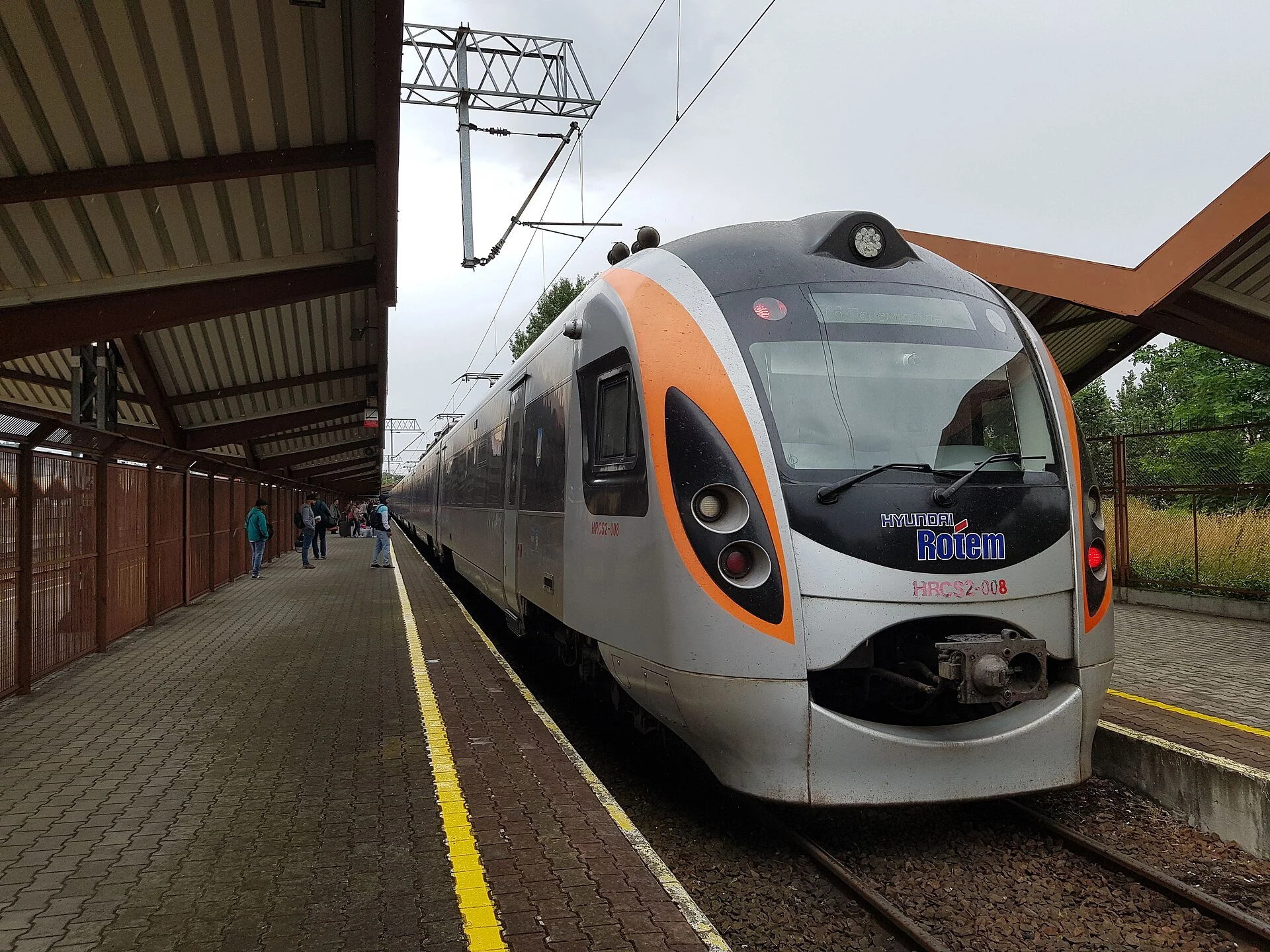
Intercity train at Przemyśl station. Photo by Maksym Kozlenko (July 10, 2019).
On my last journey back into Ukraine, the train from the Polish border town of Przemyśl departed for Kyiv with the usual hour-and-a-half delay. I wasn’t upset. I had joined the line outside the passport control building two and a half hours before the doors even opened. Once the Polish immigration officers started to work, I was soon standing by the Kyiv train, waiting for the conductors to start letting passengers on board.
In Przemyśl, lines of hundreds of people form at the station’s passport control building several times a day. Seeing that line for the first time is unsettling. You immediately feel like a tiny "nothing" that has to beg for freedom of movement. That’s how I felt when I first arrived there. To make matters worse, when I finally reached the Polish border guard, he seemed rather unfriendly. At that time, many Ukrainians who had been granted refugee status in Poland began traveling home to Ukraine too frequently, sparking suspicions among Polish authorities and leading to accusations that some of these refugees might not require their special status. I was anxious about missing my train. I didn't know that the “Ukr Rail” team had a passenger-friendly policy of waiting for the very last person to clear Polish passport control before departing.
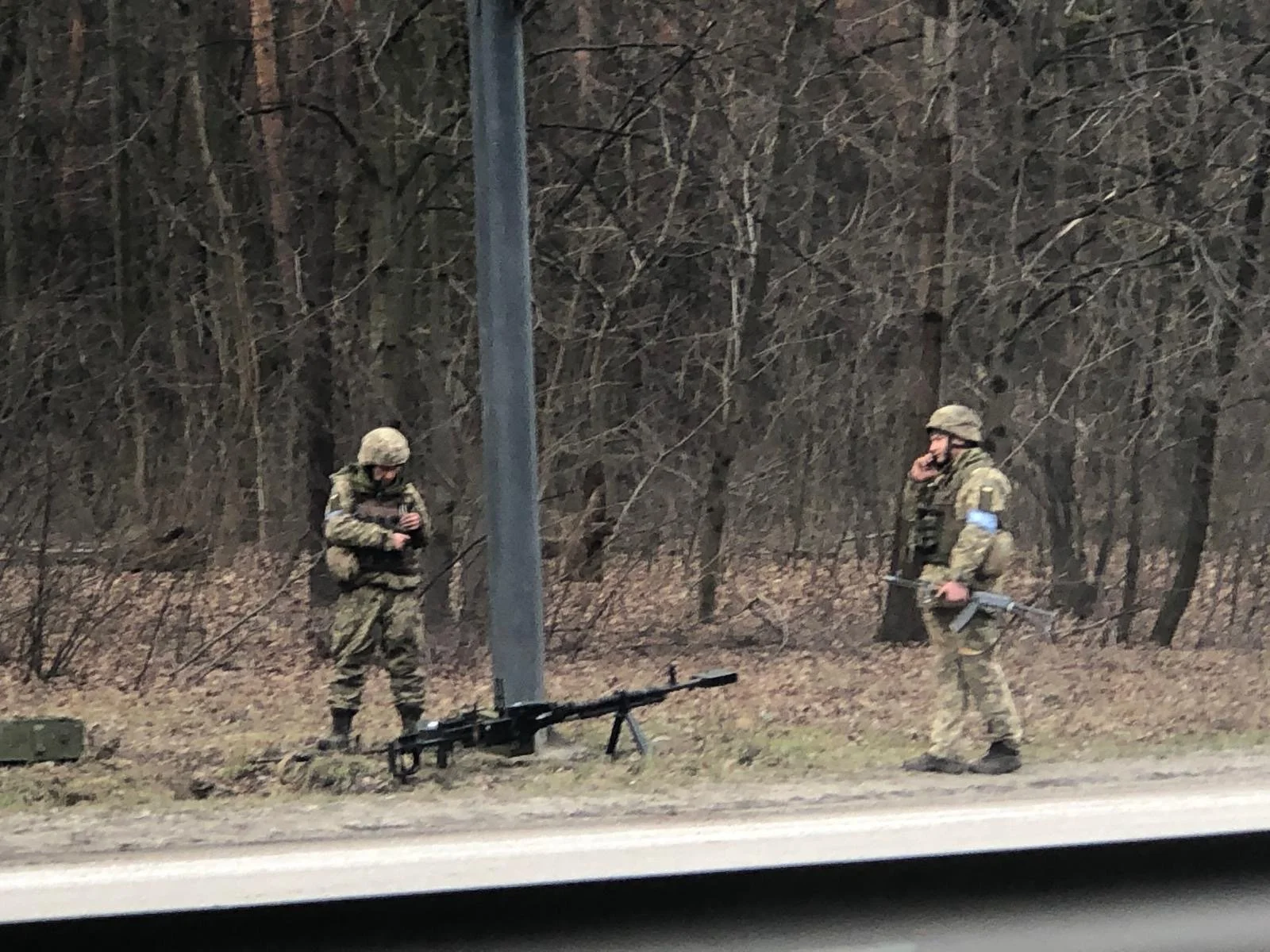
That first time, as I boarded the train, I vowed never to travel through Poland again. Since then, however, I’ve become more patient. I know about a dozen Ukrainian border crossings via which one can enter the European Union or return home to Ukraine: crossing points for cars and buses, for pedestrians or train passengers. Since February 2022, I’ve learned the pros and cons of each one, and I choose my route based on the situation on the ground. I consider myself a professional wartime traveler. I plan each trip, trying to strike a balance between the need for speed – getting from point A to point B as quickly as possible – and the expected level of stress that is now an unavoidable part of any journey.
Ukrainian passport control takes place on the Przemyśl–Kyiv train while it is moving toward Lviv. It’s convenient. Plus, the Ukrainian border guards and customs officers try to be accommodating and polite. They understand that passengers are physically and mentally exhausted; they avoid conflict and smile often. Because we – the passengers traveling from the European Union to Ukraine – are in the same boat that they are, the boat called war.
In the morning, an hour-and-a-half before the train arrives in Kyiv, the clock strikes nine, and a minute of silence is announced over the loudspeaker in every carriage to honor the fallen Ukrainian soldiers. All the passengers stand up. The ticking seconds of this minute of remembrance are played over the intercom system. Then the train rolls on, and the passengers remain standing. The daily minute of remembrance feels long – almost endless. When the ticking stops, everyone sits back down and returns to reading books or checking the latest news on their phones.
Another thousand kilometers have been added to my personal odometer. In reality, I don’t measure my movements in kilometers or miles, though that’s not entirely true. I check every day: how many miles I’ve walked, how many steps I’ve taken. To maintain the habit I walk at least six miles a day. After all, legs are the ultimate form of transportation. Sometimes, a person has no other way to flee from danger.
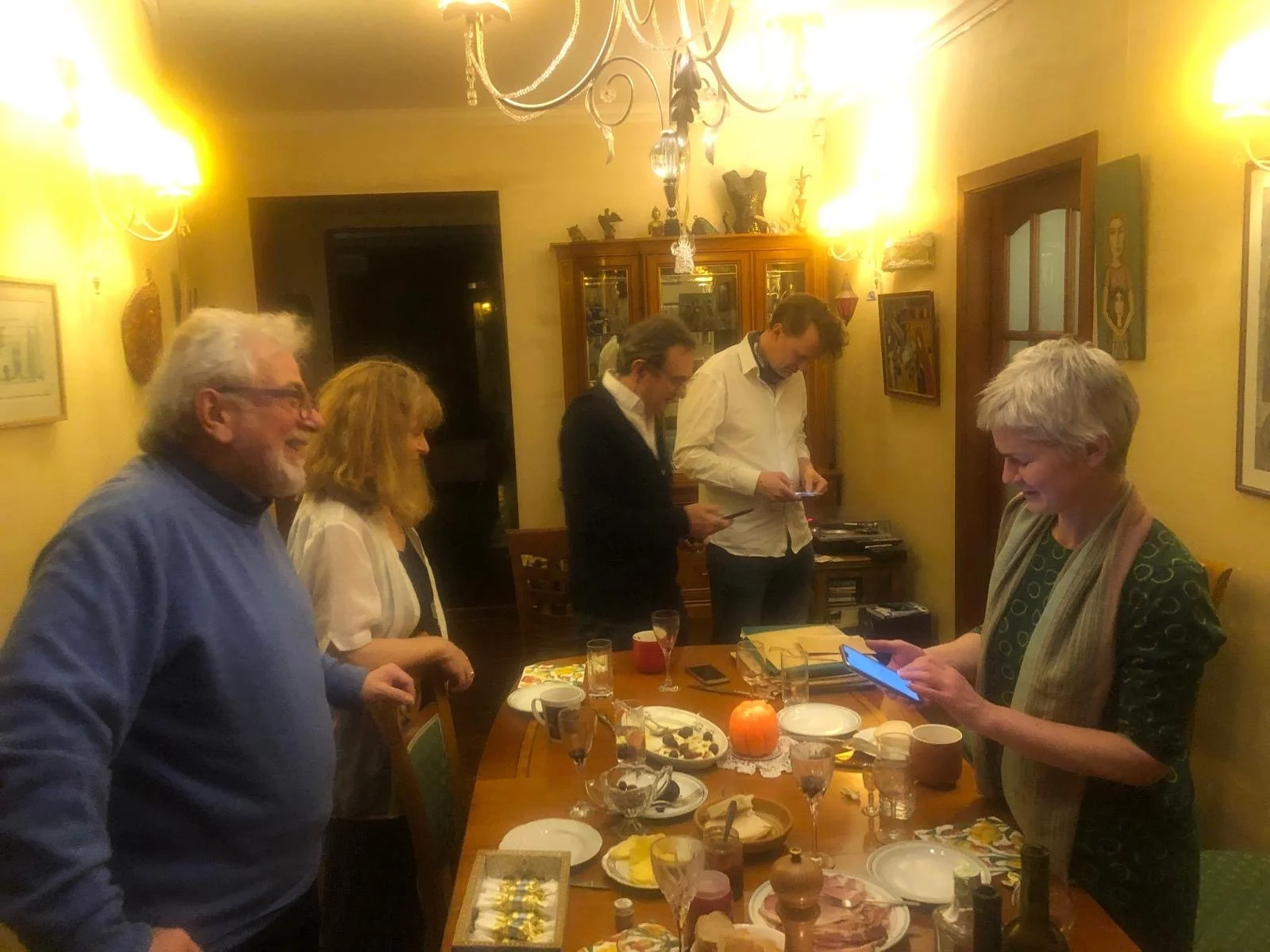
On February 23, 2022, the last passenger flight departed from Kyiv’s Boryspil International Airport. I believe it was a Lufthansa flight to Munich. I tried to verify this fact on Google, but Google was of no help. An acquaintance of mine, whom I had invited to dinner that very evening, flew out of Kyiv on that plane. The dinner went ahead without him. For those who did attend, that evening will remain forever etched in our memories.
Five hours after the guests had left, the full-scale war began and with it began a different life, a life governed by wartime rules. This new way of life didn't start the moment the first missile strikes hit Ukrainian territory; it took a few weeks for that reality to set in. At first, there was chaos. At first, there was a frantic scramble. At first, fear drove every movement and action of Ukraine’s civilian population. It must be said that for hundreds of thousands of Ukrainian men and women, anger was stronger than fear. They rushed to the enlistment offices to become voluntary defenders of Ukraine.
At Kyiv’s central railway station, fear dominated the atmosphere. Having a ticket did not guarantee a seat or even standing room on a train. Tens of thousands of Kyiv residents stormed the trains waiting on the platforms—often without tickets and frequently without a clear idea of where they wanted to go. The main thing was that the train was heading west, though routes to the southwest or northwest were also acceptable.
To bring a semblance of order to the boarding process, Ukrainian railway officials announced that only women and children would be allowed onto the carriages.
Vadim Petrovich Shipulin, a doctor and a friend of ours, tried to get his seriously ill mother onto a train. She had a ticket, but he couldn't get her aboard; he couldn't even get close to the carriage because of the dense crowd storming the train. The opening days of the full-scale war plunged the civilian population into panic. Photographs from the Kyiv railway station will go down in Ukrainian history as illustrations of that panic.
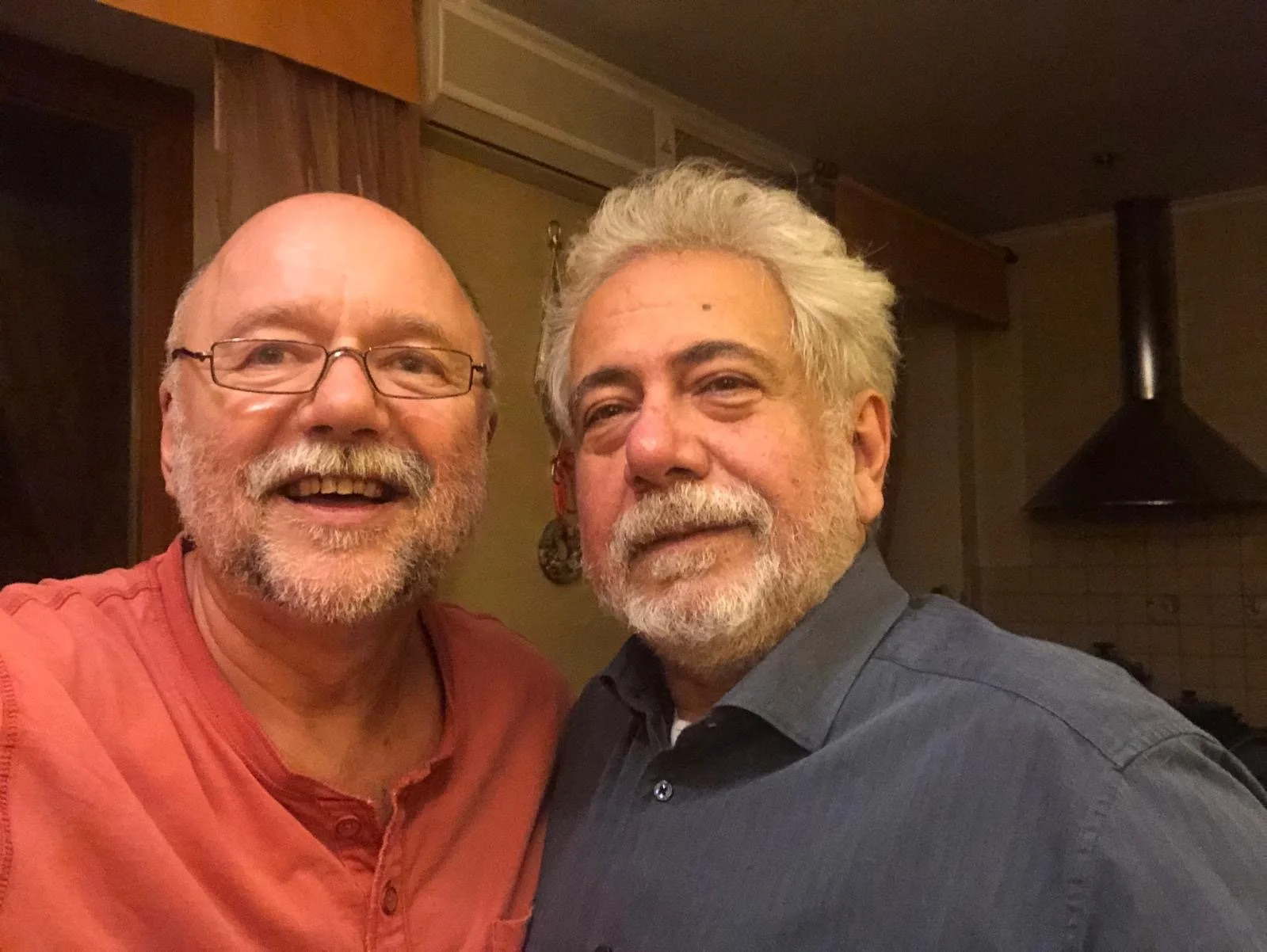
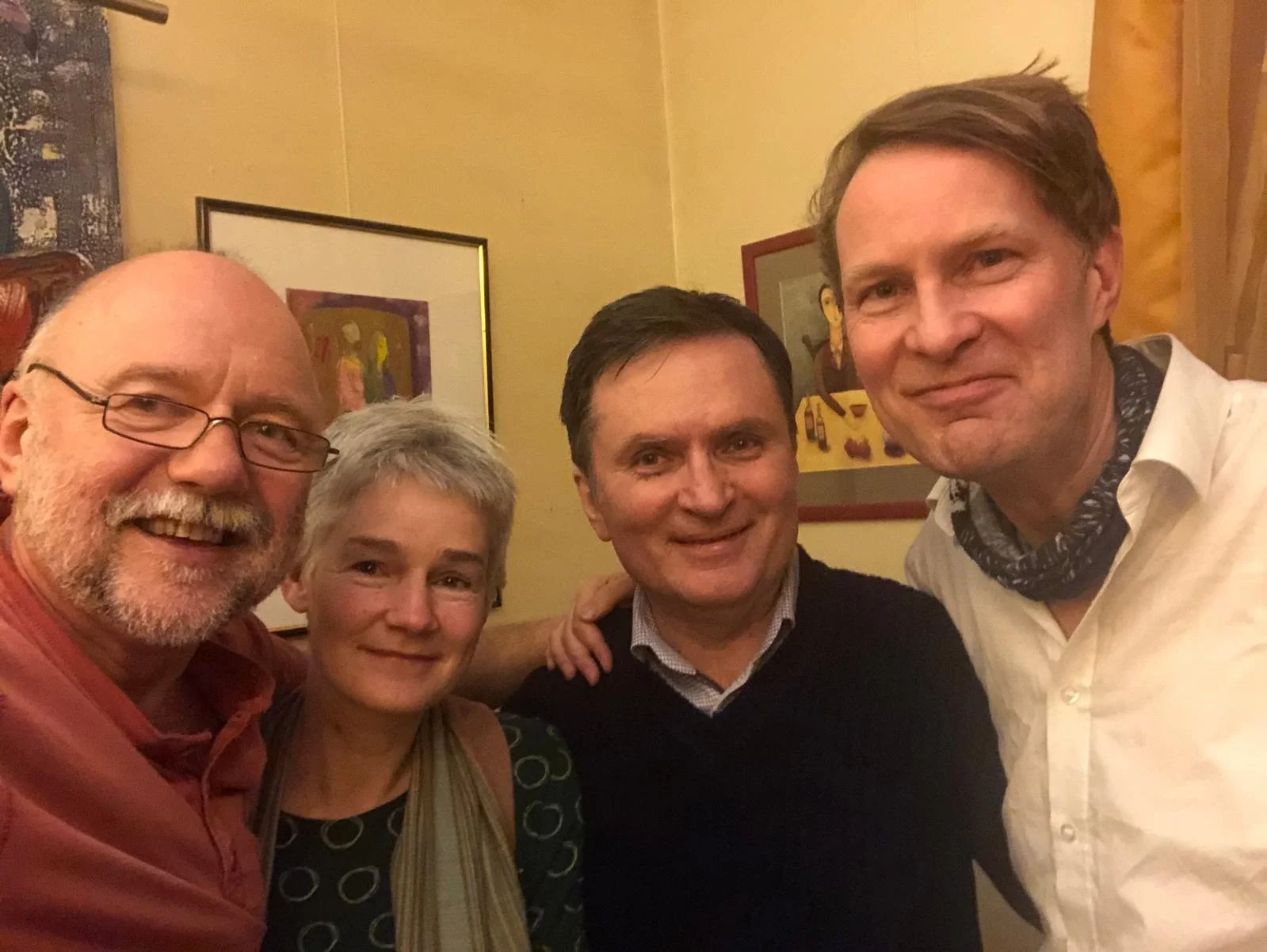
For me, the most significant photos were the ones I took on my phone after midnight on February 24. Just as our guests were leaving, they decided to exchange phone numbers. You see, several of our guests had met for the very first time at our home that evening – just hours before the war began. That evening, the British journalist and non-fiction author Lily Hyde met Norton Rapesta, Brazil’s Ambassador to Ukraine, who remained in Ukraine until the very end of his posting, while our longtime friend, the Guardian correspondent Luke Harding, met Dr. Shipulin. These photos capture people—uncertain of what tomorrow might bring—exchanging contact details so they wouldn't lose touch the moment their familiar, stable lives collapsed into something out of an apocalyptic movie.
Ambassador Rapesta was the last to leave, and my wife and I decided to walk him back to his residence, a ten-minute stroll from our home.
It was cold outside. February is usually the coldest month of the capital’s winter. On that final night of peace the city was eerily quiet, the final night of peace only for the civilians outside of occupied Crimea and Donetsk and Luhansk regions that had been enduring a Russian-backed insurgency since 2014. There were hardly any cars on the streets, even though a curfew hadn't yet been enforced and there were still four hours left before the first missile strikes ripped through the country.

The earliest days of the full-scale war will remain in my memory as the most dramatic. Millions of Ukrainians, many paralyzed by fear and subconsciously bracing for a Russian victory, loaded their families into their cars and rushed westward. It became glaringly obvious that the road infrastructure – still weak and underdeveloped after more than thirty years of Ukrainian independence – could not handle the strain. There is only one road leading west, from Kyiv to Poland, that is officially designated a "motorway.” In reality, only certain stretches have two lanes in each direction, and often one simply finds a standard “B” road, which winds through villages and was never designed for heavy traffic. Nevertheless, the M06 remains Ukraine’s main artery, as it offers the most direct route to the Polish border.
On February 24th, I checked Google Maps, and the entire route was colored red, a traffic jam stretching six hundred kilometers. People from across eastern and southern Ukraine were funneling onto this highway to make their way to the border. Traffic had ground to a halt, and the sheer volume of vehicles soon caused the fuel supplies at roadside gas stations to run out.
My wife and I decided not to rush but to wait and see how the situation would unfold. A couple of days earlier, our adult children and their friends had set off for a short getaway in Lviv, a beautiful city in western Ukraine. We knew that, for now, they were relatively safe. On the morning of February 25, I noticed that Google Maps showed no more traffic jams on the M06 Highway, and we decided to head west too.
As it turned out, there was a glitch in Google Maps. We ran into the first traffic jam just seven kilometers outside Kyiv, near Bucha and Hostomel, which would soon be the scene of horrific war crimes, as the Russians tried to take Kyiv. Missiles targeting Ukrainian airbases streaked directly over the road and the cars. Terrified drivers and passengers sat in their vehicles, patiently waiting for the cars ahead to start moving. The car next to us in the jam had Dnipropetrovsk region license plates. The driver, a man of about thirty-five, had simply rested his head on the steering wheel and fallen asleep. His wife sat beside him with two children in the back seat. They had been on the road since the previous day – the day the full-scale war began. Like us, they still had five-hundred kilometers to go to reach Lviv or nearly six hundred to the Polish border.
After reaching Lviv and finding our children and their friends, we learned that the road between Lviv and the Polish border was completely gridlocked and decided to head toward Hungary and Slovakia via the Carpathian Mountains. Thus began our life as displaced persons, a life we would lead for the next four months.
A month and a half later, the Ukrainian army liberated Kyiv region from Russian occupiers and shortly thereafter freed almost the entirety of Kharkiv region. Life in Ukraine became more dynamic and, one might even say, more vibrant. By then, over five million Ukrainian refugees had already moved to Europe and other continents, while within Ukraine several million displaced persons had relocated to Western Ukraine and were settling in. During this period, some Kyiv residents moved to Transcarpathia or Bukovina, renting out their apartments in the capital to displaced people arriving from cities closer to the front line. This ceaseless movement of people demanded logistics and transportation.
By this time, Ukraine’s railway system had managed to adopt a wartime rhythm. This meant that, alongside regular services, it had to organize evacuation trains to transport residents free of charge from the Donbas and southern Ukraine to safer regions.
Gradually, though, the railway ceased operations in the cities most at risk. Hearing it announced that train services to stations like Pokrovsk, Bakhmut, or Kostyantynivka were to be suspended sent a shiver down your spine. This signaled the imminent death of those cities. They would soon be flattened by Russian bombs and missiles. As I write, this same tragic story is playing out in Kramatorsk, which was once a major industrial city in the Donbas.
The main burden for “Ukrzaliznytsia” (Ukrainian Rail) services has shifted to a few routes leading to the borders with Poland, Slovakia, and Hungary. Tickets for these routes are hard to come by, and trains run at full capacity. Remarkably, they all depart and arrive on schedule provided they have not been targeted by Russian drones or missiles.
Recently, domestic rail services have become the target for missile and drone attacks, and the term “train evacuation” has become commonplace. An acquaintance of mine was on a night train from Kharkiv, close to the Russian border, to Lviv, and four times during the night was woken up and told to evacuate the train.
Instructions for these evacuations are striking. You must leave your luggage, get out of the train, and walk as far away from the track as possible, while keeping the carriages in view and not congregating with too many other passengers. Once the all-clear has been announced, passengers reboard the train and continue their journey. I can only imagine how terrifying and exhausting this must be.
Recently, a “terminal” evacuation occurred on a train from the Polish border to Kyiv. Passengers found themselves standing on the platform of a station just half an hour from the capital and were told that the train would go no further. I don’t suppose it was easy for all those passengers to find alternative means of transport into Kyiv, but at least this happened on a warm July morning and not in the middle of a winter night.
Long-distance bus travel was always the preferred option for Ukrainians who could not afford air tickets. Bus routes, including those operated by international companies like FlixBus, continue to take passengers from Kyiv to Barcelona or Lisbon without a transfer. Since 2022, thousands of intercity and international buses have been offering passengers an affordable alternative to Ukraine’s heavily over-subscribed trains.
For both the bus and rail networks, the busiest routes are those connecting Ukrainian cities to the nearest airports abroad. Ukrainians have not stopped traveling because of the war. Admittedly, it is mainly women, children and the elderly who are making these journeys today. Ukrainian passengers provide a steady stream of revenue for airlines flying out of Warsaw, Kraków, Rzeszów, Debrecen (Hungary), Budapest, Košice (Slovakia), and Chișinău (Moldova). Sometimes, you hear more Ukrainian than Polish spoken on flights from Kraków to London. Budget airlines like Wizz Air and Ryanair increased the number of flights on popular routes precisely because of the huge influx of Ukrainian passengers.
I have made many logistical discoveries while traveling in and out of Ukraine since 2022. The most striking find was a tiny airport in Baia Mare, in the Transylvania region of Romania located just an hour and a half’s drive from the Ukrainian border. It is the only airport I know of that lacks internet access for passengers yet offers free parking right in front of the terminal building. The downside is that flights depart from there just twice a week and only to Bucharest, the Romanian capital. From there, however, you can catch a connecting flight to almost any European capital.
The time I opted for this route, I had to return to pick up my car by train as there was no flight to Baia Mare that day. It had turned into a long journey – about fifteen hours. Still, the route is etched in my memory and might come in handy again someday.
For the majority of Ukrainians, this war has become a kind of university. Those who took no interest in international politics have suddenly acquired extensive knowledge of geopolitics. Those who disliked geography have become intimately familiar with the borderland terrain. For every single Ukrainian, this war has become a university of logistics. No diplomas will be awarded but invaluable skills have been honed: the ability to navigate territories locally and far afield and the ability to navigate life, to survive during wartime and even to plan for the future – if not for the distant future, then at least for the days and weeks immediately ahead.
Andrey Kurkov is a commentator and journalist reporting on Ukraine for the international media. He is also the author of several books, including Death and the Penguin, an international best-seller.